
Checking in on someone means contacting them directly when you notice they’re not themselves, usually with a phone call or a message that asks a real question. You don’t need training or the right words. Most of the time it takes five minutes and the patience to listen to the answer.
We talk a lot about checking in on people.
Check in on your mates.
Ask twice.
It’s OK to talk.
My inbox is always open.
All good sounding stuff. I’ve shared plenty of it myself over the years. But I’ve been thinking about what “checking in” actually means when somebody isn’t doing very well, because I’m beginning to wonder whether we’ve turned it into another phrase that sounds good but doesn’t always translate into doing anything.
The message I sent
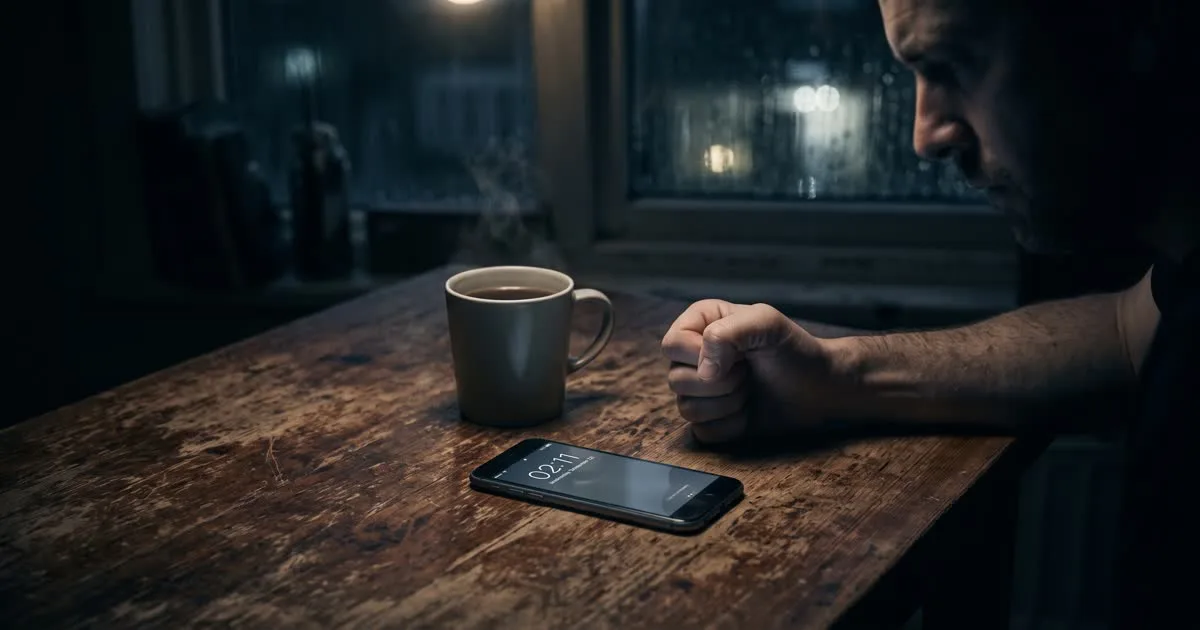
A few nights ago I sent a message to a group of people I know. I wasn’t vague. I wrote:
“Anxiety and stress making me ill. Shutting down my social apps for a while. Can’t stop the palpitations.”
I also sent it directly to somebody who tells me they care about me.
I wasn’t suicidal. Not that bad this time but even if I was thinking it, that’s normal. I wasn’t in danger. I didn’t need an ambulance or somebody racing around to my house.
I was bloody struggling, though. Had been for weeks. Well, months actually.
The stress had been building for a while. I’d been dealing with some things that had got under my skin far more than I realised. I’d had a good evening with other blokes at Andy’s Man Club, but afterwards I felt physically ill from the stress and anxiety. The following day I was flattened by it. Emotionally and physically.
Guess how many phone calls I received.
None. Not one.
And that’s been rattling around in my head. Not because I’m sat here feeling sorry for myself. Sod that. And not because I’ve decided that everybody who didn’t ring me is some uncaring bastard.
People have lives. People don’t always know what to say. Some might have thought somebody else would phone. Some might have interpreted “Shutting down my social apps for a while” as me asking to be left alone. There could be all sorts of perfectly innocent explanations.
But whatever anybody thought, the end result was the same.
Nobody called.
Sometimes somebody has already reached out
We spend an enormous amount of time telling people that if they’re struggling, they need to speak.
Reach out.
Tell somebody.
Don’t suffer in silence.
You’re not alone, mate!
But what does reaching out actually look like? Does somebody have to write, “I need help”? Do they have to phone somebody crying? Do they have to say they’re frightened about what they might do?
Or might reaching out look like this:
“Anxiety and stress making me ill. Can’t stop the palpitations.”
Because reading it back, I’d say that was reaching out. Perhaps not consciously. I wasn’t sitting there thinking, “Here is my formal request for emotional support.” I was just saying what was happening to me.
But perhaps that’s how a lot of people reach out. They tell us they haven’t slept. They say they can’t cope with work. They suddenly disappear from somewhere they’re normally active. They say they’re exhausted. They make a joke about everything going to shit. They tell us their anxiety is through the roof.
And we wait for them to ask for help.
Maybe they already have.
A lot of men don’t really have mates in the way we pretend they do
A lot of men, regardless of age, don’t have real friends.
Not just people they know. Not the bloke they talk football with. Not the mate they argue politics with. Not somebody they see in the pub, at work, at football or in a WhatsApp group.
I mean the friend who notices you’ve gone quiet. The friend who thinks, “He’s not himself.” The friend who picks up the phone without needing to be invited (I hate the way we have to ‘book a call’ these days). The friend who’d actually turn up if you said you needed him or her.
Plenty of men have people around them and they’re are still lonely.
That sounds contradictory until you’ve experienced it. You can have hundreds of Facebook friends. You can be in half a dozen WhatsApp groups. You can spend all night replying to comments, sharing videos, sending memes and arguing about football. And still have nobody you’d call at two in the morning.
That’s a very different kind of loneliness from simply being alone.
We’re supposedly more connected than ever
We live in a world where almost everybody is permanently connected to everybody else. Phones in our pockets. Messages arriving all day on Facebook, Messenger, WhatsApp, Instagram and whatever else people are using.
And yet
plenty of people feel lonelier than ever.
Many of us didn’t grow up like this. If you wanted to speak to somebody, you rang them. If you wanted to see somebody, you went round. You met people in pubs, clubs, workplaces, football grounds, cafés, community groups, youth clubs, working men’s clubs, or whatever happened to be part of your life.
None of that was necessarily perfect (but I sure do miss it). People still got lonely. People still struggled. But this world where hundreds of people can know what you had for tea, Fakebook can remind everyone when your birthday is but nobody really knows how you are – is something quite different.
And I think some men have disappeared almost completely into it.
Social media becomes the substitute. Post something. Share something. Send somebody a message. Put something vaguely funny on Facebook. Join another debate. Comment on something absolutely sodding pointless.
Sometimes, I suspect, we’re not even looking for conversation. We’re looking for evidence that somebody noticed us. A like. A reply. A laughing face. Anything. Proof that somewhere out there somebody registered our existence for ten seconds – or two.
That might sound pathetic written down. I don’t think it is. I think it’s human.
Social media can make loneliness worse
There’s a lot of evidence to back this up by the way…
For some people, social media probably does help. It keeps them ‘connected’. They maintain friendships that might otherwise disappear (so are they really friendships?). They find communities they’d never find locally. That’s real – I suppose.
But for somebody who already feels lonely, social media can produce another effect entirely. It can become confirmation.
You post something and nobody responds. You send messages and get one-word replies (or nothing). You watch other people going out together. You see photos of groups you weren’t invited to join. You notice who remembers your birthday and who only knows because Facebook told them. You realise how many people you regularly interact with who would never think to call you.
And suddenly the technology that was supposed to connect everybody starts amplifying the suspicion that perhaps you were never particularly important to anybody in the first place.
That thought isn’t necessarily true.
Social media is a terrible measurement tool for friendship.
Algorithms decide what people see. People scroll without noticing things. Messages get buried. Everybody’s distracted. But when you’re already low, logic isn’t always the thing doing the talking.
Silence can feel very loud. And that’s why I think checking in matters more than we sometimes realise.
What checking in looks like in practice
There are endless graphics on social media telling us to check in on our mates. Especially when there’s a mental health awareness day. Especially when somebody well known dies by suicide. For a few days the timelines fill up with reminders to ask people if they’re OK.
And I’m not knocking that.
Anything that gets people talking is better than silence.
But sharing a graphic isn’t checking in on somebody. Writing “my inbox is always open” isn’t checking in either. Neither is putting a heart underneath somebody’s message.
Checking in requires a person. Sometimes it requires time and inconvenience. Pick up the bloody phone.
“You sounded rough last night. I just wanted to check you’re alright.”
That’s it.
Don’t get me wrong; I’m no saint. I can be as guilty as anyone – especially if I’m avoiding people for whatever reason.
You don’t need counselling qualifications. You don’t need the perfect words. You don’t need to fix anything. You might have a ten-minute chat about absolutely nothing – or just a complete pile of bollocks.
But the person at the other end of the phone now knows one very important thing.
Somebody noticed.
And if that person is already lonely, that small act can mean more than you realise.
People doing support need support as well
There’s another side to this that I’ve probably been guilty of myself. We make assumptions about the people who normally support everybody else.
The organiser. The volunteer. The facilitator. The bloke everyone talks to because he usually seems to know what to say. The person asking everyone else how they are.
We can start to assume they’re all right. After all, they’re the one helping everybody else.
Being good at listening doesn’t make somebody immune from having a shit week.
Supporting other people doesn’t magically remove your own anxiety, loneliness, problems at home, money worries, health problems or everything else people quietly carry around with them.
Sometimes the person sitting listening to everybody else needs somebody to ask them a question afterwards. And perhaps more importantly, listen to the answer.
“How are you?” often isn’t enough
We’ve all done this.
“How are you?”
“Yeah, fine.”
“Good.”
Conversation over.
Sometimes “fine” really does mean fine. Sometimes it means
“I don’t want to dump all this on you.”
Sometimes it means
“I don’t know where to start.”
Sometimes it means
“I’m hoping you’ll notice I’m obviously not fine and ask me again.”
That doesn’t mean interrogating everyone who looks miserable. We’d get bugger-all done. But when you know someone well enough to recognise something ain’t quite right, there’s sod all wrong with asking another question.
“You sure?”
“You don’t sound yourself.”
“Want to talk about it?”
And then shut the heck up for a minute and let them answer.
The somebody-else problem
There’s something else that happens in groups. Everybody assumes somebody else will do it.
Ten people can read the same worrying message from the same bloke. One assumes his best mate (if he has one) will ring him. Another thinks somebody closer to him will have already spoken to him. Another doesn’t want to intrude. Another plans to message later and forgets. Another thinks, “He knows where I am if he needs me.”
Individually, nobody’s done anything particularly awful. Collectively, somebody can end up sitting alone wondering why nobody gave enough of a toss to pick up the phone.
That’s worth thinking about. If your reaction to something somebody writes is, “Bloody hell, he doesn’t sound good,” don’t automatically assume somebody else has got it covered.
You might be the somebody else that everyone else is relying on.
Checking in doesn’t mean taking responsibility for somebody
Checking in on somebody doesn’t mean becoming responsible for their mental health. It doesn’t mean becoming their therapist. It doesn’t mean being available 24 hours a day. And it certainly doesn’t mean you’re somehow responsible if another human being continues to struggle despite your support.
Those are ridiculous expectations to put on anyone.
Sometimes checking in really is just five minutes. A phone call. A message that asks an actual question rather than simply saying, “Hope you’re OK.” An invitation for a cuppa. Sitting next to somebody for half an hour.
And sometimes you might ask somebody if they’re OK and they’ll tell you to piss off.
Fair enough. At least they know you noticed.
I’ve had to think about my own behaviour too
It would be very easy for me to write this entirely from the position of somebody who feels let down. That would be a bit convenient.
Because, as I mentioned earlier (I’m no saint) I’m often wondering how many times I’ve done exactly the same thing.
How many messages have I read where somebody was telling me more than I realised?
How many times have I thought, “Someone should give him a call”?
How many times have I assumed somebody else was closer to them?
How often have I believed somebody when they said they were fine because believing them was easier?
I don’t know. Probably more than I’d like.
And perhaps that’s the useful bit to come out of the past few days. Not deciding who cares and who doesn’t.
Not keeping score.
Just paying more attention.
Because we constantly tell people who are struggling that they need to speak.
Perhaps those of us on the other side need to get a little better at recognising when they already have.
Thank you so much for reading this.
Before you pick up the phone
What does checking in on someone actually mean?
Checking in means contacting someone directly when you notice they’re not themselves. A phone call or a message that asks a real question counts. Sharing a mental health graphic or writing ‘my inbox is always open’ doesn’t reach anyone in particular.
How can you tell if someone is reaching out for help?
Plenty of people never say the words ‘I need help’. They mention they haven’t slept, say they can’t cope with work, go quiet somewhere they’re usually active or make a joke about everything going wrong. If a message leaves you thinking he doesn’t sound good, treat it as someone reaching out.
What should you say when you check in on a friend?
Keep it simple. Something like ‘You sounded rough last night, I just wanted to check you’re all right’ is enough, and you don’t need to fix anything. If they say they’re fine and you know them well enough to doubt it, ask one more question, then let them talk.
Is it better to phone or text someone who’s struggling?
A phone call tells someone you noticed in a way a text rarely does. Some people find calls hard when they’re low, so a text that asks a real question works too. A quick ‘hope you’re OK’ gives them nothing to answer.
Why does nobody respond when someone says they’re struggling in a group chat?
Everyone assumes someone else will do it. Psychologists call this diffusion of responsibility, and it means ten people can read the same worrying message without any of them calling. If you’re wondering whether someone has got it covered, assume they haven’t.
Are you responsible for a friend’s mental health if you check in?
No. Checking in doesn’t make you their therapist or mean being on call 24 hours a day, and you’re not to blame if they keep struggling. If you think someone is in immediate danger, call 999, and Samaritans are free on 116 123, day or night.