
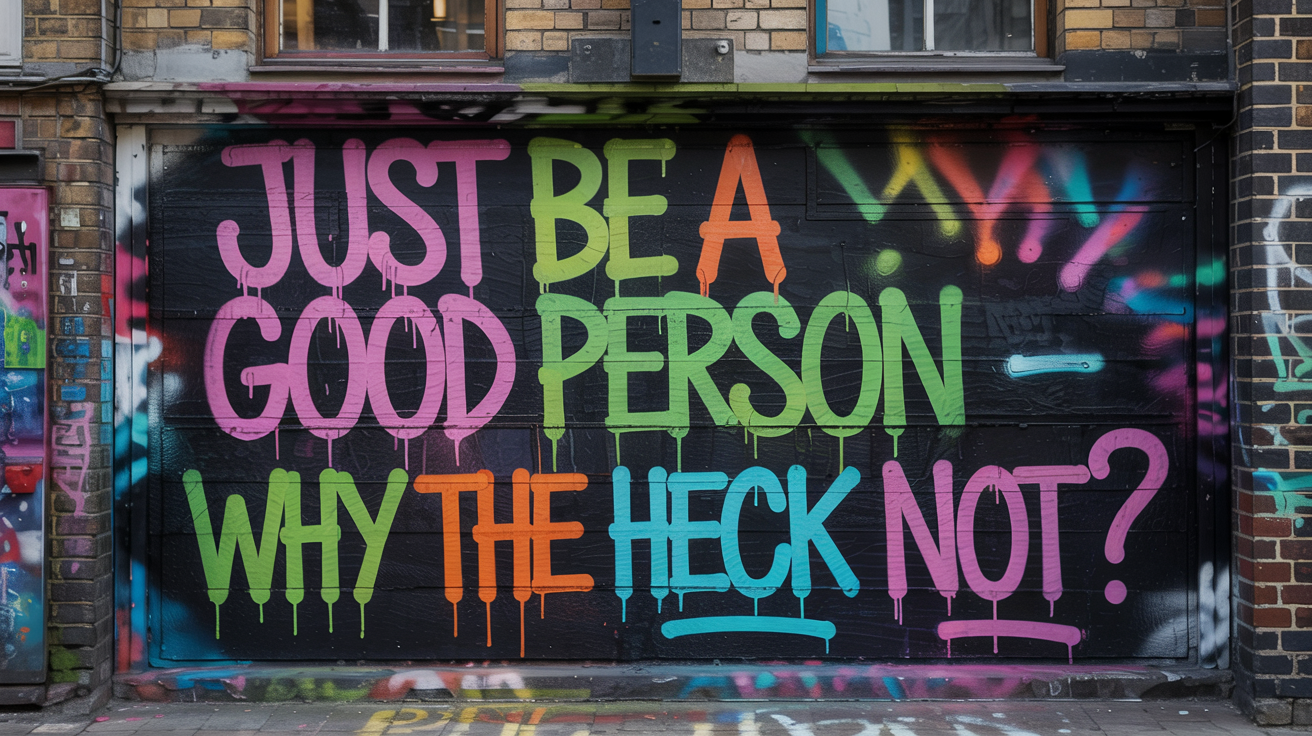
You ever get told you give too much? That you’re too generous, too willing, too “oh, don’t worry, I’ll sort it”? Yeah, me too. All the bloody time. Apparently, there’s this great universal scoreboard where every act of kindness is supposed to be logged, balanced, and monetised. But, funnily enough, I must’ve missed that memo.
People look at me sideways when I say, “I don’t charge for that.” Like I’ve just confessed to licking public door handles. I get the lectures: “You’re undervaluing yourself!” “People will take advantage!” “Even a token amount, mate, come on.”
But here’s the thing. I don’t do it for them. I do it because it makes me feel good. And honestly? There’s nothing more selfish than being selfless.
The Unwritten Rule of “What’s In It for Me?”
Modern society operates on this unspoken contract: You scratch my back, I’ll Venmo you the invoice. Nobody just does things anymore. Everything has to be a trade, a barter, a bloody transaction. And if you give something for nothing? People treat you like you’ve just wandered out of a cave, baffled by the concept of capitalism.
When did “just being decent” become a suspicious act?
I run a Facebook group with 12,000 people in it. One day, I randomly promoted a local business because, well, why not? I had the skills, the means, and I knew it’d help. Fast forward a couple of weeks, and the guy I helped came up to me in the real world (yes, folks, that place beyond WiFi signals) and said, “Thank you. How much do I owe you?”
Nothing, mate. Not a penny.
Cue the confused looks. Because somewhere along the way, people forgot that generosity isn’t an invoice-able offence.
Giving Without Expectation: The Radical Concept No One Understands
I don’t do it for the recognition. Hell, half the time I forget I’ve even done it. That’s the point. The act of helping shouldn’t come with a receipt.
But, and here’s the kicker (oh, wait, I’m not allowed to say that cos it sounds like ChatGPT) – the bizarre thing is, giving without expectation actually gives you something back. Just not in the way people think.
It’s not money. It’s not clout. It’s not some karmic freebie waiting in the wings.
It’s the damn good feeling of having done something decent. That’s the reward. That’s the high. And let’s be honest – there’s no better feeling than knowing you’ve made someone’s day without them having to owe you a thing.
The “If You Can, Then Why Not?” Philosophy
We overthink generosity like it’s some advanced-level chess game. Should I? Shouldn’t I? What if they expect more? What if I look like a mug?
Stop. Just bloody stop.
If you’ve got a skill, and you see someone struggling, just help. Not everything needs to be an itemised business expense. If you’re an electrician and you see your neighbour’s outside light flickering like a budget horror movie, fix it. If you know someone is drowning in something you can handle in ten minutes, lend a bloody hand.
It doesn’t have to be complicated. It doesn’t have to be grand. It just has to be a choice to be a decent human being.
When to Charge and When to Just Be a Good Person
Look, I get it. You’ve got to eat. If a business can afford your services and they ask for them, charge them. That’s business.
But if you see someone in need, and you’ve got the ability to help, and you know damn well they can’t afford it – why not just do it? Why does everything need a price tag?
“But Martin, you can’t work for free forever!”
No, of course not. But this isn’t about working for free. It’s about not being a cold, calculating tosser in a world already full of them.
The Best Kind of “Selfish”
Let’s flip the script. Maybe helping others is selfish. Because it feels damn good. Maybe generosity isn’t some saintly act – it’s a powerful, addictive high. Knowing you’ve just made a real difference? That sticks with you. And if that makes me “too generous,” then sod it, I’ll wear that like a badge of honour.
The irony? The more you give, the more you tend to get back. Not in cash, not in favours – but in the kind of good karma that actually means something. Real relationships. Real trust. Real satisfaction. That’s worth more than twenty quid, any day of the week.
The “Stop Overthinking It” FAQ
Why should I help people for free if it doesn’t make money?
Because not everything in life needs a price tag. Being a decent human isn’t a business transaction. If your only metric for value is cash, you might want to rethink your priorities.
What if people take advantage of my generosity?
Some will. That’s life. Doesn’t mean you should stop helping—it just means you should stop helping them. Being generous doesn’t mean being a doormat. Learn to spot the takers and redirect your kindness to those who actually deserve it.
How do I set boundaries with people who expect free work?
Simple. You say: “This is what I do for a living, mate. If you want me to do it, here’s my rate.” No need for guilt, no need for over-explaining. If they value you, they’ll pay. If they sulk, they were never planning to pay anyway.
Should I charge for my skills or keep offering free help?
Depends. Are you struggling to pay your own bills? Then, charge. Are you in a position where helping out won’t cripple you financially? Then, help. It’s not black and white. Charge when it makes sense. Give when it feels right.
What’s the difference between kindness and being a mug?
Intent. If you’re helping because you want to, that’s kindness. If you’re helping because you feel guilty or pressured, that’s being a mug. Learn the difference, and you’ll never feel resentful about giving again.
Will being generous ever come back to benefit me?
Not always in the way you expect. Don’t do it for the return. Do it because it’s the right thing to do. That said, people remember those who genuinely help. Sometimes, that goodwill turns into opportunities, connections, or just the rare privilege of being respected in a world full of takers.
How do I stop feeling guilty for saying no to free work?
Ask yourself this: Would they feel guilty for asking me to do something for free? Probably not. So why should you?
Is there such a thing as ‘too generous’?
Only if it’s draining you. If giving starts feeling like a burden instead of a choice, that’s your sign to step back. Generosity should feel good, not like a bloody unpaid internship.
Final Thought: Stop Keeping Score
Not everything in life needs a bloody invoice. Not every good deed needs a tally. If you’ve got the ability to help, just do it – no calculators, no expectations, no bullshit.
Because at the end of the day, the real “what’s in it for me?” isn’t money. It’s knowing that you weren’t a complete wazzock in a world that desperately needs more good people.
That’s worth more than any cheque.