
In Summary:
This piece isn’t just about one man’s bruised ego or a careless insult. It’s about how a single thoughtless comment can reopen the wounds of decades-old abuse. I was mocked by someone who knew exactly how fragile I once was, and it sent me straight back to the frightened boy I’d spent a lifetime trying to outgrow. That’s the reality of trauma: it doesn’t vanish because you’ve “moved on.” It hides, waiting for the next cruel remark to drag you back into its grip.
For every celebrity with a microphone shouting Me Too, there are millions of unheard voices living with the same scars; the quiet, ordinary people who’ve had to smile through humiliation just to survive another day. This article is for them. It’s a reminder that emotional wounds don’t expire, that words can still cut as deep as fists, and that even if no one’s listening, speaking your truth still matters.
Me Too – But Without the Microphone
The Moment I’ll Never Forget.
I don’t remember the exact date, but I’ll never forget the moment.
Somewhere several years ago when I was standing in front of a bloke who, at the time, I depended on financially. Most of my income came from his company. And in the middle of what should have been a normal conversation, he decided to get personal.
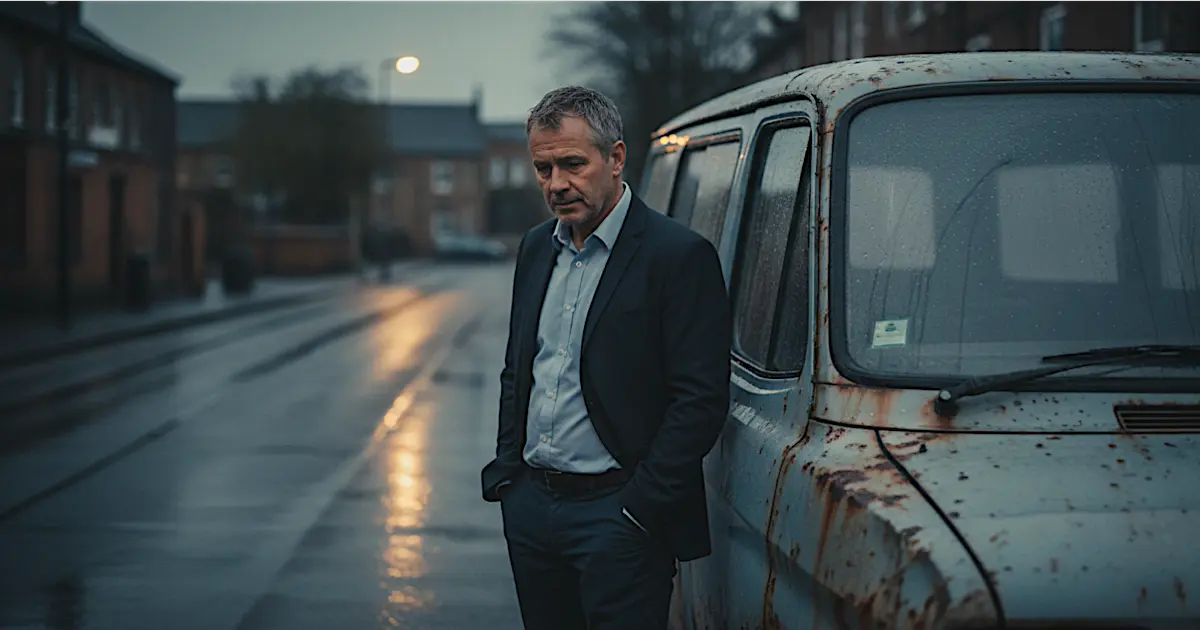
He compared my face – yes, my actual face – to the rusty front end of a van.
The Joke That Wasn’t a Joke
Now, to set the scene, I’d just had some dental work done. Not cheap. A proper investment in myself, something I rarely did back then and have rarely done since. I’d hated my teeth for years, felt self-conscious about smiling, about even existing in certain spaces, because I’ve never thought of myself as good-looking. My wife thinks so, and bless her for that, but I’ve always felt like the oddball. The scrawny little shit who never quite fit in. The one people would look at and think, “what happened to him?”
So when this man, who knew parts of my history (but couldn’t have cared less) who knew about the abuse, the trauma, the years of being ripped apart mentally and emotionally – looked at that rusty van and said something along the lines of, “Would you spend that much money putting a new bumper on that?”, it was like being kicked in the stomach.
If I had been an employee, I could have took that twat to the cleaners!
Instead I had to laugh. Because what else could I do? You can’t bite the hand that feeds you, even if it’s slapping you in the face. You can’t risk losing the income that keeps the roof over your head. So you laugh, even when inside you’re screaming. You pretend it’s nothing. You tell yourself, “He’s only joking.”
But he wasn’t joking.
He was cruel.
And the truth is, cruelty rarely hides behind humour – it hides behind power.
The Trigger and the Fallout
What he didn’t realise, or likely he did and didn’t care, was that comments like that don’t just sting. They detonate. They blow open every scar you thought had finally healed – or at least learnt to mask.
One stupid, smug remark, and suddenly I was back there again. That frightened kid, the awkward teenager, the boy who flinched at the sound of raised voices because he’d learned what came next.
That’s what abuse does. It doesn’t end when the shouting stops or when you leave the house or when you grow up. It lives in you. It waits quietly in the shadows until something triggers it. A look, a tone, a so-called joke. And then it’s back, like it never left.
The Cruelty People Excuse
And what makes me furious is how normalised this crap is. The world is full of people who think they’re being funny when they’re really just exposing how little empathy they’ve got. Online and offline. Real world or virtual word. They’ll say, “I didn’t mean it like that” or “You’re too sensitive.”
No.
You’re too cruel.
You’re too thoughtless.
You’re too bloody comfortable thinking your words don’t have consequences.
Because words do have consequences. Especially when someone’s been broken before. Especially when someone’s worked hard to glue themselves back together, to feel halfway human again.
One careless comment can undo years of work.
This Isn’t About Pity
And no, I’m not writing this for pity. I don’t want it. I’ve lived long enough to understand that most people don’t give a toss unless it’s trending. I’m writing this because I’m angry. Because too many people still think abuse is something you leave behind, like it’s an old chapter you can just close. It isn’t. It’s the watermark that never fades.
I’m writing this for everyone who’s had to sit there, smiling through the humiliation, because speaking up wasn’t an option. For everyone who’s had to swallow their dignity to keep a job, a client, or even just the peace. For everyone who’s ever wanted to scream, “That wasn’t funny!” but knew they’d be called oversensitive.
The Forgotten “Me Too” Voices
We hear all these “Me Too” stories from Hollywood stars, politicians, footballers. People with a platform, with a voice, with a safety net. Good for them for speaking up, genuinely. But what about the rest of us? What about the people who don’t have a microphone, or an audience, or a team of PR experts to make sure their story lands softly?
What about the people like me and millions of others who could also say me too but don’t bother because nobody’s listening?
We don’t get front-page coverage. We don’t get applause for our bravery. We just get on with it. We keep our heads down and carry our invisible scars because life doesn’t pause for healing when you’ve got bills to pay.
The Truth Nobody Likes to Hear
But here’s the truth that nobody likes to talk about:
- Our pain counts too.
- Our abuse was real too.
- And it still hasn’t gone away.
So yes, I could shout me too, many of us could and bloody well mean it. But we know it will echo into silence, because men like me – people like me – don’t trend. We’re not click-worthy. We’re just human beings trying to make sense of a world that’s far too comfortable laughing at other people’s pain.
And if you’ve ever been on the receiving end of that kind of cruelty, I want you to know something: you’re not overreacting. You’re not weak. You’re not broken beyond repair.
You’re just someone who remembers how it felt to be humiliated and hasn’t forgotten the lesson.
Speaking, Even Into Silence
The difference is, now we talk about it.
Even if no one’s listening.