
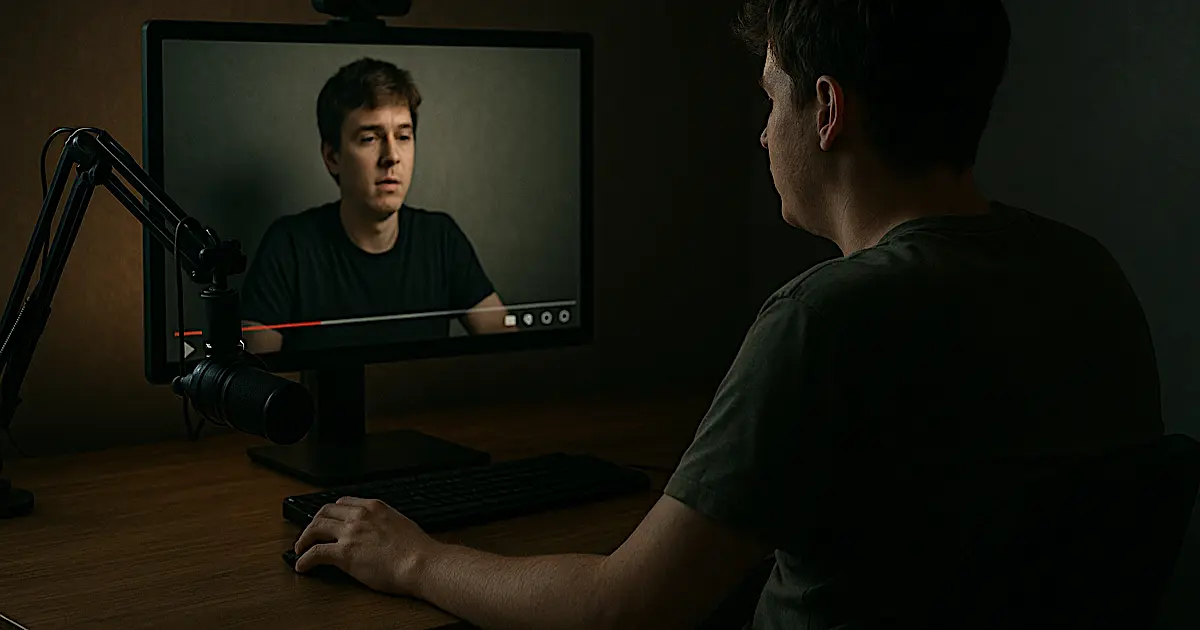
Reaction videos have become one of the internet’s most lucrative scams. Creators sit in front of a camera, play someone else’s video, add barely any commentary, and collect ad revenue whilst the original creator watches their work get carved up and redistributed across platforms. The worst part? Platforms enable it, audiences lap it up, and copyright enforcement remains utterly toothless.
Fair Use Was Never Meant for Silent Watching
Fair use exists to protect commentary, criticism, and transformative work. It was designed to let creators build on existing material in meaningful ways. What it wasn’t designed for is letting people press play and zone out whilst someone else’s video runs for an hour.
YouTuber Ethan Klein – who ironically won a landmark fair use case in 2017 defending reaction content – is now suing three Twitch streamers for doing exactly that. One streamer allegedly aired 70 minutes of Klein’s 100-minute documentary without speaking, spread across 74 segments of 30 seconds or longer. Another left to use the bathroom and let the video keep running. A third allegedly scrolled Reddit whilst Klein’s content played in the background. When challenged, the defence from some corners has been that their “casual, meandering style” constitutes cultural critique. Good luck selling that to a judge.
Klein’s original court victory established that transformative criticism can justify using copyrighted material, but the ruling came with a warning: not all reaction videos qualify as fair use. Some “intersperse short segments of another’s work with criticism and commentary,” whilst others are “more akin to a group viewing session.” The streamers Klein is suing allegedly told viewers to watch their streams instead of “giving the Nuke views,” which is blatant market substitution. One stream peaked at 45,800 viewers – fourteen times the creator’s typical audience – presumably translating into donations, subscriptions, and ad revenue stolen directly from the original work.
The First Time Hearing Scam
The “first time hearing Pink Floyd” genre perfectly encapsulates this exploitation. Thousands of channels film themselves watching classic tracks, claiming fair use whilst essentially rebroadcasting entire songs with reaction shots. These videos rack up hundreds of thousands of views, monetising music they had nothing to do with creating, all whilst pretending their theatrical facial expressions constitute transformative content.
The formula is cynically simple: pick a beloved song with a passionate fanbase, film yourself listening to it for the first time, add minimal commentary beyond “wow, that’s amazing,” and watch the views roll in. The original artists see nothing. The reaction channel pockets the ad revenue. Fans who could’ve watched the official release or a live performance are instead funnelled to a video where someone nods along and occasionally pauses to say “the guitar work here is incredible.”
Platforms Changed the Rules and Nobody Noticed
YouTube introduced policy changes in July 2025 targeting “mass-produced and repetitious content” that lacks originality. Channels posting AI-generated commentary, lazy reaction compilations, and barely-modified reposts are supposedly at risk of demonetisation. Yet enforcement remains virtually non-existent for reaction channels pulling in thousands monthly. One reaction creator with 2.12 million subscribers earns an estimated £4,000-£13,000 per month just by watching other people’s content.
Meanwhile, TikTok, Instagram, and YouTube have created ecosystems where reposting is actively encouraged despite official policies requiring permission and proper credit. Users are supposed to ask for permission, tag the original creator in both the post and caption, and use repost apps that maintain watermarks. In practice, none of this happens. Enforcement is a joke. Original creators watch their content get recycled endlessly across reels and shorts with minimal recourse unless they fancy spending time and money pursuing copyright claims against hundreds of accounts.
The platforms benefit from this mess. More content means more ad inventory, regardless of who actually created it. YouTube’s Content ID system can flag seconds of copyrighted audio in an original documentary, but somehow entire videos playing with a face in the corner slip through as “transformative.”
The Problem Isn’t Just Lazy Creators
This isn’t solely about individual bad actors gaming the system. The entire infrastructure of modern content platforms rewards low-effort repackaging over genuine creation. Algorithms prioritise watch time and engagement, not originality. A reaction video that keeps viewers on-platform for 20 minutes whilst playing someone else’s work performs better than a 5-minute original piece that required days of research and editing.
Smaller creators face the harshest consequences. Big names might get a warning or a second chance, but lesser-known channels see their monetisation privileges revoked overnight with little recourse. Meanwhile, reaction channels with massive followings continue posting barely-commented content because platforms won’t risk losing their ad revenue.
What Actually Counts as Transformation
Transformation requires effort. It means adding insight, analysis, or critique that wouldn’t exist without the reactor’s input. It means using short clips or excerpts, not playing 70 uninterrupted minutes. It means the commentary outweighs the copied footage. Most importantly, it means the reaction shouldn’t function as a substitute for the original.
Reaction content done properly involves frequent pauses, genuine analysis, and a perspective that adds value beyond “I’m watching this too.” Channels like CinnamonToastKen break up content regularly with long discussions and transformative elements. That’s worlds apart from sitting silently for an hour whilst someone else’s video plays, occasionally emitting what Klein’s lawsuit describes as “loud gastral intestinal emissions.”
The courts will eventually draw clearer lines, but creators shouldn’t need lawsuits to understand basic ethics. If someone could watch the reaction and get the same experience as the original without supporting the original creator, that’s not transformation – that’s theft with a webcam.
Straight Answers to Common Questions about Reaction Videos
Are Reaction Videos Actually Legal?
It depends entirely on execution. Reaction videos qualify as fair use only when they add genuine commentary, criticism, or transformation that substantially differs from the original content. Simply pressing play and watching silently is copyright infringement with a webcam, regardless of how many followers the reactor has.
Why Don’t Platforms Automatically Remove Reaction Videos?
Platforms profit from reaction content through ad revenue, regardless of who created the original work. YouTube’s Content ID can flag seconds of copyrighted audio but allows entire videos to play with a face in the corner because enforcement is selective, inconsistent, and often favours high-traffic channels over smaller original creators.
Can I Legally React To Music If I Pause And Comment?
Short excerpts paired with substantial commentary may qualify as fair use, but playing entire songs whilst nodding and saying “this is brilliant” does not constitute transformation. Music reacts face aggressive Content ID flagging, revenue sharing, or outright removal, especially when minimal analysis accompanies the playback.
What Happens If I Get Copyright Strikes On My Channel?
Three copyright strikes result in permanent channel termination with minimal recourse. Each strike expires after 90 days, but accumulating multiple strikes quickly ends monetisation privileges, removes uploading capabilities, and ultimately deletes the entire channel along with years of content and subscriber relationships.
Does Crediting The Original Creator Protect Me From Copyright Claims?
Absolutely not. Credit and attribution do not constitute permission or legal defence against infringement. Fair use hinges on transformation and commentary, not acknowledgement, meaning creators must add substantial original input beyond simply stating where the content came from or tagging the original poster.
Why Did Ethan Klein Sue Reaction Streamers After Winning A Fair Use Case?
Klein’s 2017 court victory established that transformative criticism protects reaction content, but it explicitly warned that not all reactions qualify. The streamers he’s suing allegedly aired 70 minutes of his content with minimal commentary, one leaving for the bathroom whilst the video played, which constitutes redistribution rather than transformation.
How Much Of Someone Else’s Content Can I Use In A Reaction Video?
There’s no magic number or safe percentage. Courts evaluate four factors, including how much was used, whether it harms the original’s market value, and whether the reaction functions as a substitute for watching the original. Using short, targeted excerpts with substantial commentary stands a better chance than playing lengthy uninterrupted segments.
Sources
Think Reaction Content is a Safe “Fair Use” Bet? Maybe Not!
firemark.com
Ethan Klein Files Copyright Lawsuits Over ‘Lazy’ Reaction Videos
copyrightlately.com
YouTube targets unoriginal content in latest policy update
podcastle.ai
YouTube Clarifies Changes to Monetization Rules Around “Inauthentic” Content
socialmediatoday.com
Some Thoughts on “Reaction” “Content”
indiecator.org
Do you copyright strike reaction videos?
reddit.com
YouTube Targets “Inauthentic” Content
plagiarismtoday.com
How to Legally Repost User-Generated Content on Instagram & TikTok
later.com
Reposting Social Media Content – Avoid Copyright Lawsuits
ac-legal.com
YouTube Channel Monetisation Policies
support.google.com
How to Avoid YouTube Demonetization in 2025
onestream.live
YouTube Monetization Changes 2025: What You Must Know
sybrid.com
Reaction Vlogger’s Subscriber Count, Stats & Income
vidiq.com