
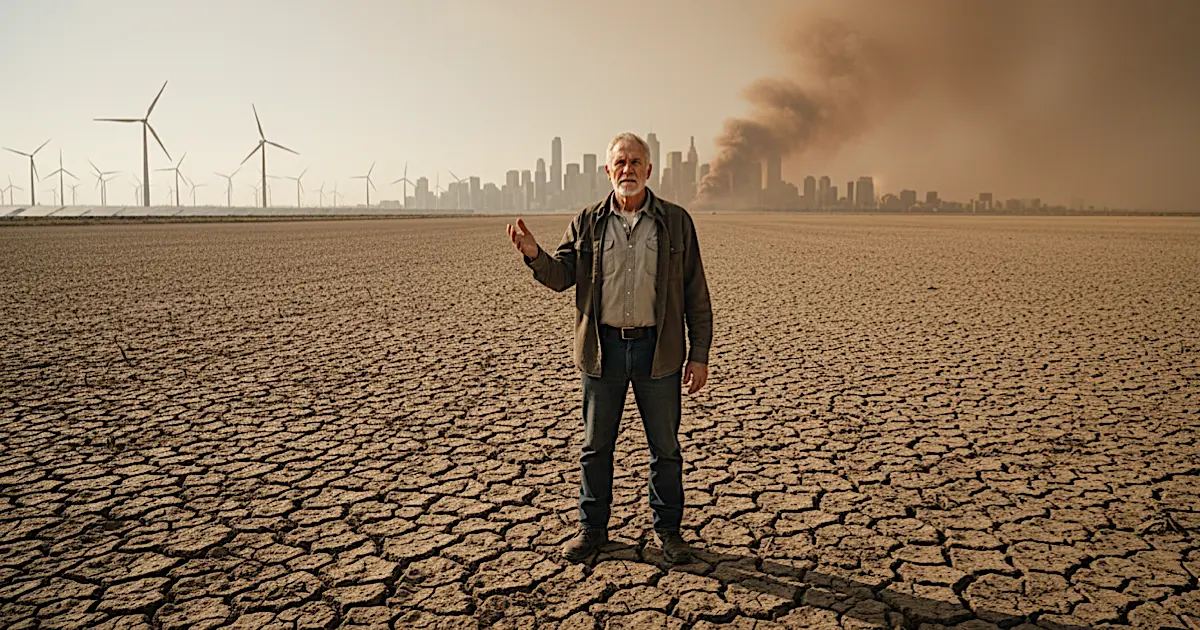
I am getting on a bit. Half century long passed.. Old enough to have lived through many promises, targets, grand speeches, and the glossy brochures telling us that we were heading toward a fairer, greener, more sustainable future.
And I’m old enough to look back and say: if this is progress, it doesn’t look or feel like it.
I’m not writing this as an expert. I’m not a climate scientist or a policymaker. I’m a bloke who’s lived long enough to see the steady decline in the quality of life, the hollowing out of society, and the casual destruction of the planet while we are constantly being told things were getting better.
And I’m angry, because none of this should come as a surprise.
We were warned
Back in 1992, the United Nations hosted the Rio Earth Summit. It gave birth to Agenda 21. This was the big plan for sustainable development that has since morphed into Agenda 2030. At the time, it sounded like a turning point. Frightening as some of the suggestions were (and I get that most people never read Agenda 21), governments were (it seemed) coming together to tackle the environmental crisis.
But there were people who saw through it.
Pratap Chatterjee and Matthias Finger published The Earth Brokers in 1994, a fierce critique of the Rio Summit. Their conclusion was brutal: the UN had “boosted precisely the type of industrial development that is destructive for the environment, the planet and its inhabitants.” The result, they said, would be simple:
“the rich will get richer, the poor poorer, while more and more of the planet is destroyed in the process”.
It wasn’t cynicism. It was clear-eyed realism.
They pointed out that free trade, multinational corporations, and militarism were quietly left off the table. “The environment” was reframed as just another economic sector, something to monetise and manage with market tools. That warning, in hindsight, was more accurate than the shiny promises of world leaders.
If George Orwell’s 1984 warned us about control, surveillance, and the distortion of truth, The Earth Brokers warned us about green promises that never intended to change the underlying system. Both warnings were ignored.
25 years on, the scoreboard
So how did it play out? The uncomfortable truth is that the critics were right.
- The UN’s own numbers tell the story: only about a third of Sustainable Development Goal (SDG) targets are on track, nearly half are lagging, and almost one in five are going backwards.
- Carbon emissions keep hitting record highs. Especially in some countries despite the west getting most of the flack and many of us (like here in the UK) paying through the nose for the failures of other nations.
- Biodiversity collapse is well underway. WWF’s Living Planet Report shows monitored vertebrate populations have declined on average by 73 percent since 1970. That’s not a blip. That’s systemic decline.
- Inequality has widened. The World Inequality Database shows the top 10 percent have taken an ever-larger share of income since 2000, while Oxfam highlights how wealth is concentrating at the very top. Meanwhile, hundreds of millions remain trapped in poverty.
This isn’t just about distant statistics. You can feel it in daily life. Public services disappearing. Housing becoming impossible for younger generations. Work more precarious. The online world reduced to scams, adverts, and rage.
The quality of life doesn’t match the promises we grew up on.
The green veneer
One of the most bitter truths is that “sustainability” itself has been turned into a business model. Companies and governments boast of net zero targets (largely bullshit and pie in the sky bonkers) while ripping forests apart, destroying wildlife habitats, rivers and oceans. ESG (Environmental, Social, and Governance) has become a buzzword for investors, not a guarantee of change.
This is exactly the “green veneer” The Earth Brokers warned about: a system that wraps itself in eco-friendly language while continuing business as usual. The environment didn’t become a priority. It became a marketing exercise.
Oh let’s all plant a tree. Utter bullshit!
And we’re all expected to play along. Pay more tax. Use paper straws. Recycle diligently. Buy an electric car if you can afford one. Meanwhile, cargo ships carry cheap junk across the oceans, and billionaires fly private jets to climate conferences.
Not all bad, but not enough
To be fair, there have been gains – allegedly. Fewer people die from dirty air in Europe (even though areas around ports breathe fumes from ferries and ships almost 24/7). More people globally have access to education and energy than ever before. More land is officially protected (or is it?). These things matter, and they’re worth acknowledging. But they don’t outweigh the bigger picture: the structural causes of decline are still intact, and in many areas we are going backwards.
Even the data we rely on can be contested. The Living Planet Index, for example, has its critics (mostly from people who couldn’t give a shit about wildlife) but even some of its harshest critics agree that biodiversity loss is real and severe. Similarly, some argue inequality is overstated because the very poorest are slightly less poor than in the past (really?). But relative inequality still shapes the world most of us live in, and the system still rewards the already wealthy disproportionately.
What kind of world have we built?
We’ve built a world of promises without delivery. A world where governments outsource responsibility to corporations. A world where growth is still the measure of success, even if that growth eats the future alive.
Yes, some of us live longer, we buy better gadgets and enjoy comforts that our parents couldn’t even imagine. But at what cost? Communities hollowed out. Nature collapsing. Politics paralysed. And the gnawing sense that the young are inheriting a poorer, harsher, more precarious world than the one we grew up in.
It didn’t have to be this way.
We were warned.
The books were written. The warnings were spoken. The data was there. We didn’t lack knowledge. We lacked honesty, courage, and the willingness to stop prioritising profit over life.
What now?
I don’t entirely buy into the fatalism that says “it’s too late” (yet). But I do believe half-measures and PR pledges won’t cut it. If we’re serious:
- Carbon needs a real price, and if we the regular folks are paying the price, some of the money should be given back to us, not corporations for planting a few saplings.
- Sustainability targets need to be enforced, not volunteered. And not just in the nation contributing under 1% of the damage.
- Local resilience – energy, food, community – needs to be rebuilt (a good kick up the arse) from the ground up.
- And we need to stop treating digital exploitation, scams, and attention theft as “just the way it is.”
None of this will happen easily. The interests that profit from the status quo are powerful. But that doesn’t change the truth: every year we delay, the costs multiply.
So, what kind of world have we built?
One that feels more fragile, unequal, and dishonest than the one we were promised. But also one where we still have the tools to shift direction if we can summon the will.
I don’t expect miracles but I refuse to sit back and pretend the warnings weren’t there, or that this is just “how things go.” It’s not. It’s choices. And we’d better start making better ones.
Questions people ask about Agenda 21 (Agenda 2030)
What Did The Earth Brokers Warn About Back in the 1990s?
They argued that the 1992 Rio Earth Summit boosted the very model of industrial development that was already damaging the planet. Their warning was that the rich would get richer, the poor poorer, and the environment would be left in ruins.
Are the UN Sustainable Development Goals on Track?
No, not really. Only about a third of the targets are on track, nearly half are lagging, and around one in five are going backwards according to the UN’s own reporting.
Is Climate Change Really Getting Worse?
Yes. Carbon dioxide levels measured at Mauna Loa in 2025 hit around 425 parts per million, the highest ever recorded. Extreme weather events are also becoming more frequent and severe, hitting the poorest communities hardest.
Why Does Inequality Keep Coming Up in These Debates?
Because wealth and income have become more concentrated at the top over the last three decades. While some poverty has been reduced, the gap between the richest and the rest has widened, shaping politics, opportunity, and stability across the world.
Have There Been Any Real Successes Since Rio?
Yes, but they are limited. More people worldwide have access to education and energy, and some countries have cut deaths linked to air pollution. These gains matter, but they are overshadowed by the scale of environmental decline.
What Can Ordinary People Do When the Problems Seem So Big?
You cannot fix everything yourself, but you can make choices that matter locally. Supporting community energy, demanding honest policies, resisting greenwashing, and calling out scams and exploitation are all ways of pushing back.
Is It Too Late to Change Course?
No, but time is short. Every year of delay makes the challenge more costly and the damage harder to reverse. Real change depends on political will, and that only shifts when enough of us stop accepting empty promises.