
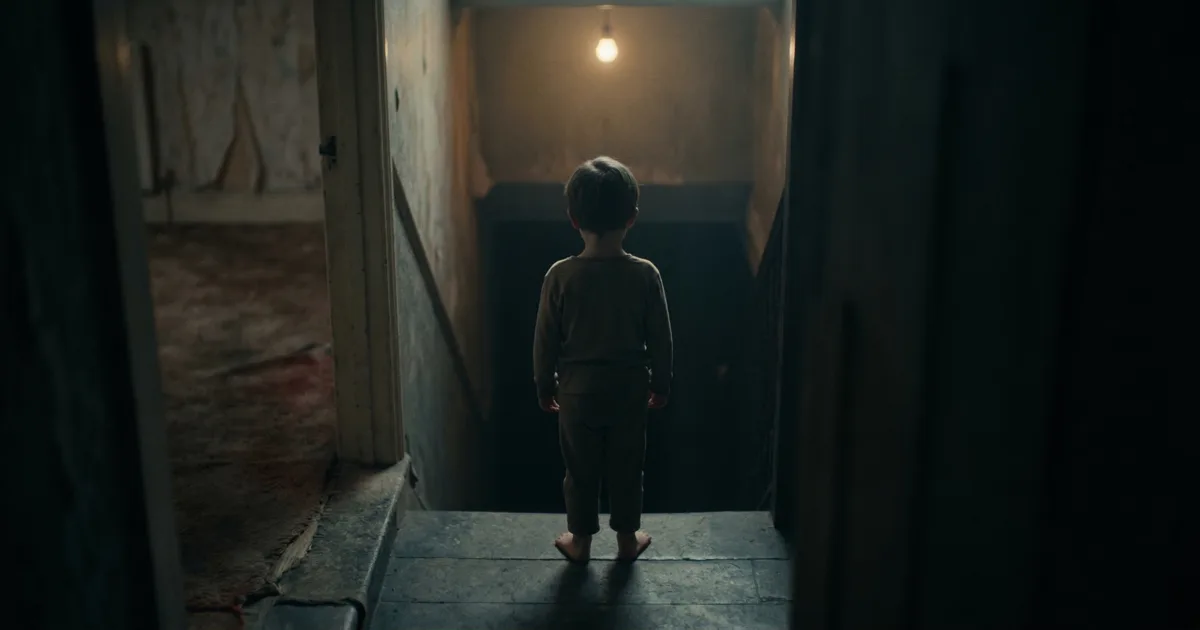
Imagine being scared in your own home before you even understand what fear is.
Not teenage fear. Not adult worry about bills or work. I mean the sort of fear that sits in the stomach of a three or four year old who hasn’t yet figured out how the world works.
A small child who learns, very early, that home isn’t safe. But even that seems odd to say because at that age you don’t even know what ‘safe’ is. You don’t know what ‘normal’ is. You don’t know that this is not the way life is. All you know is that you’re afraid of it.
That was life for the first eighteen years of mine.
The memories start young. Standing at the top of the cold, stone, cellar steps, wearing nothing but a vest and underpants. Or standing in the living room facing the wall because that’s what I’d been told to do. Waiting. Not knowing when the next slap would come, but knowing it probably would.
Sometimes it came quickly. Sometimes it didn’t.
That waiting is its own kind of torture. But maybe that is what life is for a child. I didn’t know any different.
It wasn’t just the hits either. It was the words. The name calling. The bullying. Being treated like a nuisance or a servant instead of a child who needed protection.
But I didn’t know.
“Is this normal” wasn’t even a question.
This was my normal but phrases like that never came into my head. Why would they? Being ignored one minute and punished the next. Living in a constant state of trying to read the room.
Trying to work out whether today was going to be a quiet day or a bad one. Maybe I did, maybe I didn’t.
Maybe I just accepted it.
I know I keep saying this but I didn’t know any different.
Children don’t understand psychology or trauma. They just adapt. They shrink themselves to survive whatever environment they’re in. Especially when (as it was back in the 60s and 70s, and how it would be for a child of that age now, I guess) they have no idea that any of this is so wrong. They don’t know it’s wrong.
I think I should repeat that…
a child has no idea that any of this is so wrong. They don’t know it’s wrong.
So that’s what I did. I became quiet. Watchful. Careful. Always alert. Always expecting pain – physical or otherwise.
It’s amazing how good a child becomes at adapting, at just living with whatever, and spotting danger.
When People Say “That Was in the Past”
Decades later you sometimes hear the same sentence.
“That was a long time ago.”
Or the more polished version.
“You need to leave the past in the past.”
For the people saying it, that probably sounds reasonable.
For them it was the past.
For the child who lived it, the story doesn’t end when that house with the cold cellar steps and locked bedroom door gets left behind.
The brain doesn’t just wipe the hard drive when you turn eighteen.
- Certain sounds still hit like a jolt of electricity.
- A raised voice.
- A sudden bang.
- Even certain looks on someone’s face.
The body reacts before the mind has time to reason with it.
I’ve learnt that’s not weakness. That’s how trauma works. The nervous system stores those patterns. Psychiatrists have been writing about this for decades. In 2014 the psychiatrist Bessel van der Kolk published The Body Keeps the Score, documenting how traumatic experiences embed themselves in the brain and body long after the events themselves have finished.
The past doesn’t politely stay where it happened.
It leaks into the present.
The Shame That Never Quite Leaves
Another thing people rarely talk about is the shame.
Not the shame of what was done to you. The shame of being the child it happened to.
It’s irrational, but it’s real.
Children assume the world revolves around them, I guess. They don’t know any different. When something bad keeps happening to a child, they don’t sit there asking philosophical questions about it. They don’t have the language or the distance.
They just live it.
What’s wrong with me? isn’t something a three year old asks. Or even a six year old.
Nor is: Why am I the one being treated like this? They don’t know they’re one of the few living this way.
And even if they did, or when they eventually do, the questions don’t disappear easily. They linger. Sometimes for decades. Sometimes for life.
Even as an adult you can feel the echo of it. A quiet voice in your head (or a bloody loud one, at times) that still wonders whether you deserved it somehow.
You didn’t. No child does.
But trauma doesn’t always listen to logic.
The Fear That Still Shows Up
People think fear fades with time.
Sometimes it does.
Sometimes it doesn’t.
When fear is wired into your childhood, it becomes part of the operating system.
The brain stays alert. Always scanning. Always checking.
You can be sitting in a perfectly safe room and still feel like something bad might happen.
That’s the strange thing about trauma. It bends time.
What happened thirty or forty years ago can still feel like it happened yesterday.
And in many ways it did. Because the brain keeps replaying it.
Not constantly.
But often enough.
Why This Still Matters
There are people walking around today who carry the same history.
You wouldn’t know it by looking at them. They might hold down jobs. Run businesses. Raise families. Smile in photos.
But underneath that normal surface there’s a nervous system that grew up in survival mode.
And survival mode is hard to switch off.
That’s why telling someone to “just move on” rarely helps. It’s a bit like telling someone with a broken leg to run it off.
Trauma needs understanding. Sometimes therapy. Sometimes years of rebuilding a sense of safety that never existed properly in childhood.
And sometimes it just needs to be spoken out loud.
Because silence is often where shame grows strongest.
Writing It Down
The words above came out in one burst.
Not polished. Not carefully structured. Just honest.
That’s sometimes how these things surface.
You carry them quietly for years. Then one day something nudges the memory and the words appear before you’ve had time to filter them.
Maybe that’s a good thing.
Maybe the first step in loosening the grip of the past is simply saying what actually happened.
Not dressing it up. Not pretending it didn’t matter.
Just telling the truth.
And letting the words sit there.
Questions Worth Asking, Even When They’re Hard
Why do childhood experiences still affect people decades later?
Early experiences shape how the brain learns to respond to danger and safety. When a child grows up in a threatening environment, the nervous system adapts to stay alert. Those patterns can remain in adulthood, which is why certain sounds, behaviours or situations still trigger strong reactions years later.
Is it normal for traumatic memories to feel like they happened recently?
Yes. Trauma is stored differently from ordinary memories. Instead of feeling like a distant event, it can remain vivid and emotionally present. Many people describe it as feeling like the event happened yesterday, even if it occurred decades ago.
Why do people say “leave the past in the past” to trauma survivors?
Most people who say this mean well but misunderstand how trauma works. They see time passing and assume the emotional impact fades automatically. In reality, traumatic experiences often stay active in the body and mind until they are processed and understood.
Does talking or writing about trauma actually help?
For many people it does. Putting experiences into words can reduce the sense of secrecy and shame that trauma often creates. Writing or speaking about it does not erase the past, but it can help people regain some control over how those memories affect them.