
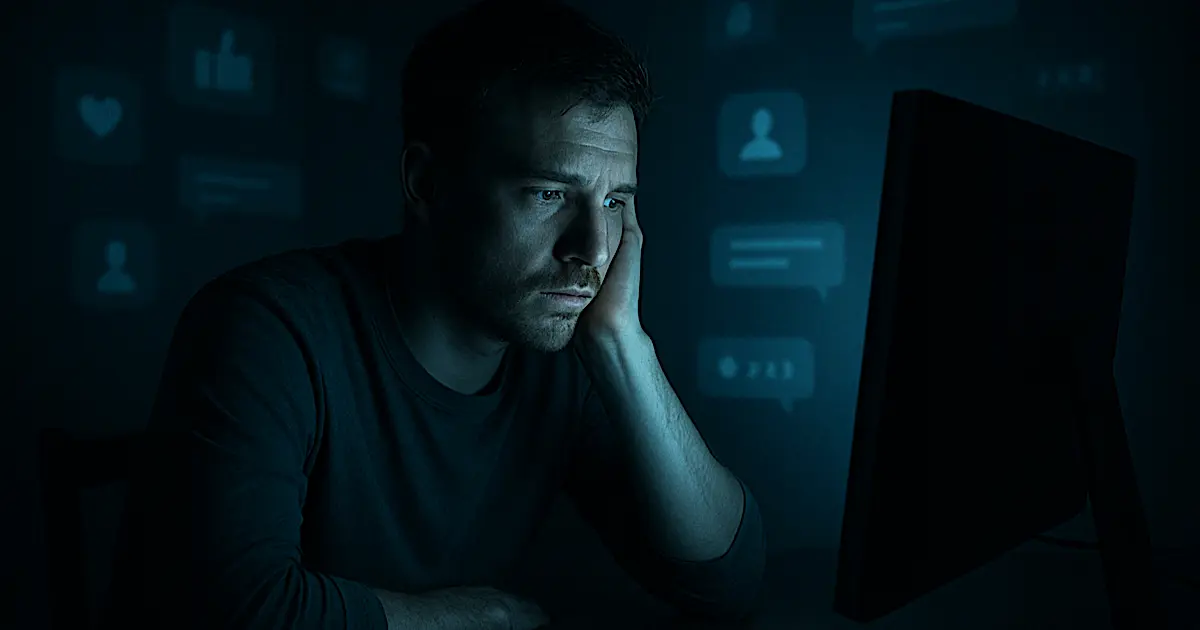
We’re told that social media can bring people together. That it connects the lonely, offers comfort, builds communities. And in some corners, maybe it does. But in others, it becomes something darker, a factory of false hope.
The Illusion of Safety in ‘The Safe Space’
I joined a group called The Safe Space. A Facebook community that branded itself as a sanctuary for those struggling with mental health. Its posts were filled with difficult stories, affirmations about kindness, openness, and healing.
“You are enough,” they’d say. “You are never alone.”
I’d written a post just before my 62nd birthday about how tired I felt of life, about loneliness, exhaustion, and feeling invisible. It wasn’t a cry for help, just an honest moment of vulnerability from someone trying to keep going.
The response was overwhelming. Over a hundred people reacted, dozens commented with empathy, compassion, and understanding. It felt, for a moment, like what the group claimed to be: a safe space.
Then, without warning, I was gone. Removed. Banned. Blocked. No explanation, no message, just erased. The founder of the group, a man who sells himself as a mental health advocate, blocked me on Facebook and Instagram after I politely asked what had happened.
That’s not a safe space. That’s cruelty dressed up in kindness.
The Power Trip Behind “Kindness”
There’s a strange power that comes with running an online community. A person can go from being just another user to playing God over other people’s voices. Behind their keyboard, they decide who gets to speak, who gets to stay, and who disappears.
In genuine mental health work, that power is balanced with responsibility. In online “support” spaces, it’s often unchecked. What begins as a mission to help turns into a form of control, and anyone who becomes too visible, too honest, or too uncomfortable for the admin’s ego suddenly finds themselves on the outside.
The phrases are always the same: “protecting the group,” “keeping it positive,” “maintaining boundaries.” But let’s be real. Protecting the group from what? From honesty? From emotion? From the reality that mental health isn’t tidy or marketable?
It’s easy to talk about compassion. Harder to live it. When people like that hit block or delete, they don’t think about the fallout. They don’t think about how their “moderation decision” lands on someone who already feels unwanted. They’re too busy curating their image as the hero of healing.
The truth is, when compassion becomes content, empathy dies.
The Fallout of Being Silenced
Being banned from a group might not sound like a big deal to someone who’s never relied on one. But to those who live with loneliness, rejection, or depression, it’s devastating.
The human brain doesn’t see “removed from a Facebook group.” It sees rejected again. It sees I don’t belong anywhere. For someone living with conditions like Rejection Sensitive Dysphoria, which often overlaps with ADHD and trauma, that kind of digital exile can trigger a deep, familiar pain.
When I was banned, I felt it immediately. That quiet collapse. The anger, then the shame. I’d been polite. I’d been supportive. I’d thanked them publicly for creating a kind space. And yet, I was suddenly erased.
I spent hours that day unable to speak to anyone. I felt invalidated, worthless, like I didn’t have a place in the world. I even hovered over the option to delete my Facebook account entirely. That’s how quickly a single careless action can spiral into suicidal thoughts.
If you think that’s dramatic, you don’t understand what mental health support actually means.
You don’t remove someone for being honest (and extremely vulnerable) and then pretend your group is a sanctuary. That’s not safeguarding. That’s abandonment.
Accountability Isn’t Optional
At Andy’s Man Club, if a facilitator ever told a struggling man to leave, and that man went home and took his own life, there would be hell to pay. Because when you take on that role – when you call yourself a facilitator, an advocate, a safe space – you inherit a duty of care.
You live by the labels you give yourself. You don’t get to wear “mental health advocate” as a badge when it makes you look good, and then throw it away when someone’s honesty becomes inconvenient.
If you can’t handle vulnerability, don’t run a mental health group. If you can’t manage empathy when it’s messy, don’t preach about kindness online. Because one click – one lazy, thoughtless click – can undo weeks, months, or years of someone’s fragile recovery.
Even the Samaritans understand that the right response to a cry for help is a conversation, not a deletion. That’s not rocket science. That’s basic humanity.
The Business of Being “Kind”
Mental health has become a brand. You can buy T-shirts, mugs, and stare at Instagram reels about “ending the stigma.” But too often, these so-called advocates are just playing to an audience they can (and do) monetise later.
The performative compassion industry thrives on image. Carefully staged videos, trendy language, “ambassadors of awareness” (yeah, right – bullshit). Yet when faced with real emotion, many crumble. They only want curated vulnerability – the kind that earns engagement, not the kind that challenges them to act.
That’s what’s happening online right now. The language of support has become currency. The more you talk about kindness, the less you have to practice it.
A Real Safe Space Doesn’t Delete People
Real support doesn’t block people. It listens, checks in, and follows up. It doesn’t decide that one person’s pain is too inconvenient for the feed. It makes time, even when it’s uncomfortable.
If you can’t offer that, stop calling it a safe space. Call it what it is; a social media project built on borrowed (and brandable) empathy. Because every time one of these so-called advocates silences someone, they risk doing irreversible harm.
And for anyone running or moderating a mental health community: if you don’t have the strength, the time, or the will to be there for people when they’re at their worst, step away. Better to close the group than destroy the trust of the people who rely on it to stay alive.
When Safe Spaces Aren’t Safe – the FAQs
What Should a Genuine Mental Health Group Do When Someone Posts About Wanting to Die?
They should respond, not remove. A quick message, a signpost to help, or a check-in from an admin can make all the difference. Silence or removal only reinforces the idea that the person is a burden.
Can Removing a Struggling Member from a Group Cause Real Harm?
Yes. For people living with loneliness or trauma, sudden rejection can trigger intense emotional pain or suicidal thoughts. Online spaces feel real to those who depend on them for support, and exclusion can be devastating.
Are Facebook Groups Legally Responsible for Members in Crisis?
Legally, no. Morally, yes. When a group claims to be about mental health and compassion, it takes on a duty of care to communicate responsibly and avoid causing harm through neglect or avoidance.
Why Do Some Mental Health Groups Ban Honest Posts About Suicidal Thoughts?
Often out of fear, liability, or a misunderstanding of what real safeguarding means. It is easier to delete a post than to start a difficult conversation, but that fear-based moderation hurts the very people the group claims to help.
How Can You Tell If an Online Community Is Genuinely Safe?
Look at how they respond to honesty. Real safe spaces don’t hide behind positivity filters. They allow pain, disagreement, and emotion without punishment.
What’s the Best Way to Support Someone Who Has Been Banned or Silenced Online?
Reach out privately, listen, and remind them their voice still matters. A simple message like “I saw what happened, are you OK?” can pull someone back from a dark place.
Why Are So Many Mental Health Groups Turning Toxic?
Because compassion online is easy to fake. Many are built for visibility, not vulnerability. When image matters more than integrity, even “kind” spaces can become cold and dangerous.
Sources
Rejection Sensitive Dysphoria and ADHD
additudemag.com
Samaritans: How to Talk About Suicide Safely Online
samaritans.org