
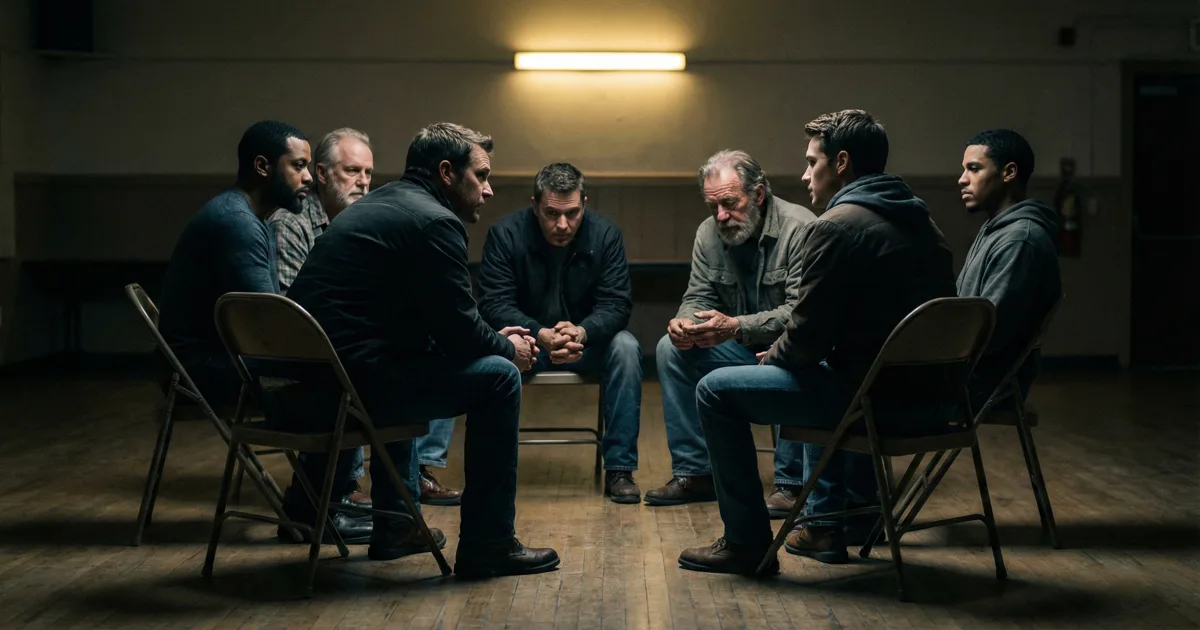
Every Monday, across more than 330 groups, around 6,500 men walk through the doors of Andy’s Man Club.
That doesn’t happen because someone ticked a box on a rota. It happens because teams show up.
Yes, we need a Lead Facilitator. Yes, we need a Co-Facilitator, a couple of Sweepers, ideally 4 facilitators in the room for safeguarding reasons. But if we reduce it to that, we miss the point entirely.
The handbook is clear – a facilitator is not a counsellor, not a professional, not there to offer advice. He is a member of the group. That line matters more than we realise.
“If You Don’t Need Me, I Won’t Come.”
I’ve heard it.
I’ve seen it.
Maybe I’ve even thought it myself at times over the years.
But the truth is, it’s never about whether we need you to fill a slot. It’s about whether the group benefits from you being there.
A facilitator who turns up and chooses not to lead that night is
- still holding space,
- still modelling vulnerability,
- still supporting the Lead.
He’s another steady presence in the room, helping make sure there’s no 1-2-1 safeguarding risk – and even sitting quietly in the circle, he’s part of the safety net.
That matters more than ego, hierarchy or roles.
The Shirt Doesn’t Make the Team
The handbook says facilitator clothing must be worn when facilitating, but if a facilitator wants to wear his own clothes and step back from facilitating for the night, that’s fine too.
That’s deliberate.
Because this isn’t about the shirt. It’s about the man.
You can take the lead. You can second chair, sweep, or sit in that circle as a bloke first and a facilitator second. Either way, you’re still part of the team.
The Quiet Support No One Sees
Some Mondays are heavy. The “Anything to get off your chest?” question is called ‘the big one’ of the session for a reason – men dig deep, shame surfaces, old wounds get stirred.
On those nights, the Lead might look composed, but he’s carrying weight. The Co-Facilitator is watching the room. The Sweeper is ready if someone arrives late or walks out.
The rest of the facilitators are reading body language, sensing the atmosphere, doing the invisible work that doesn’t get applause but keeps the room safe.
Safeguarding Is a Team Sport
The safeguarding policy is clear – safeguarding is everyone’s responsibility. Not the safeguarding lead’s alone, not head office’s, not just the Lead’s.
Everyone’s.
That means
- not leaving a facilitator isolated,
- not creating 1-2-1 situations,
- backing each other if something feels off,
- participating in the debrief, and
- logging concerns properly.
If one of us decides “they’ve got enough tonight, I’ll stay home,” we might unknowingly increase the pressure on everyone else.
Teamwork isn’t about control. It’s about cover.
This Is Bigger Than Us
Around 400 to 500 men attend for the first time every single week. Think about that bloke. He walks in not knowing the rules, not knowing the culture, weighing up whether this place feels safe.
If he walks into a room where facilitators look united, steady, and supportive of each other, he relaxes. If the room feels thin, stretched, or fragmented, he feels that too.
Men notice more than we think.
Team Before Title
We didn’t volunteer just to facilitate. We volunteered to serve the purpose – to reduce the number of men taking their own lives, to provide a safe, non-judgemental space, to model what support between men can actually look like.
That requires something simple: turn up (if you can). Not because you’re needed to lead. Not because your name’s on a rota. Not because someone asked.
But because you’re part of the team.
And in a room where honesty can cut deep, where silence can weigh heavy, and where vulnerability takes real courage, being present is never a small thing.
It’s the foundation.
Questions Men Ask About Showing Up
Do I have to facilitate every week to be part of the team?
No. Showing up matters more than leading. A facilitator who’s present but not running the session is still holding space, supporting the Lead, and contributing to the safety of the room. The role is bigger than the rota.
Why do you need at least three facilitators at every session?
It’s a safeguarding requirement. Having three facilitators in the room prevents 1-2-1 situations and ensures no single person is left carrying the weight alone. It’s about cover, not just numbers.
What’s the difference between a Lead Facilitator, Co-Facilitator and Sweeper?
The Lead runs the session. The Co-Facilitator supports and watches the room. The Sweeper is there if someone needs to step out – ready to follow up and check in without leaving anyone alone. Each role matters, and they work as a unit.
Can I attend as a member rather than a facilitator sometimes?
Yes. The handbook is clear that facilitators can attend in their own clothes without facilitating if they choose. You’re still a member of the group first. Stepping back for a session doesn’t mean stepping away from the team.
Who is responsible for safeguarding at Andy’s Man Club?
Everyone. Not just the Designated Safeguarding Lead, not just head office. Every facilitator in the room shares that responsibility – from completing the debrief to logging concerns and backing each other up if something feels off.