
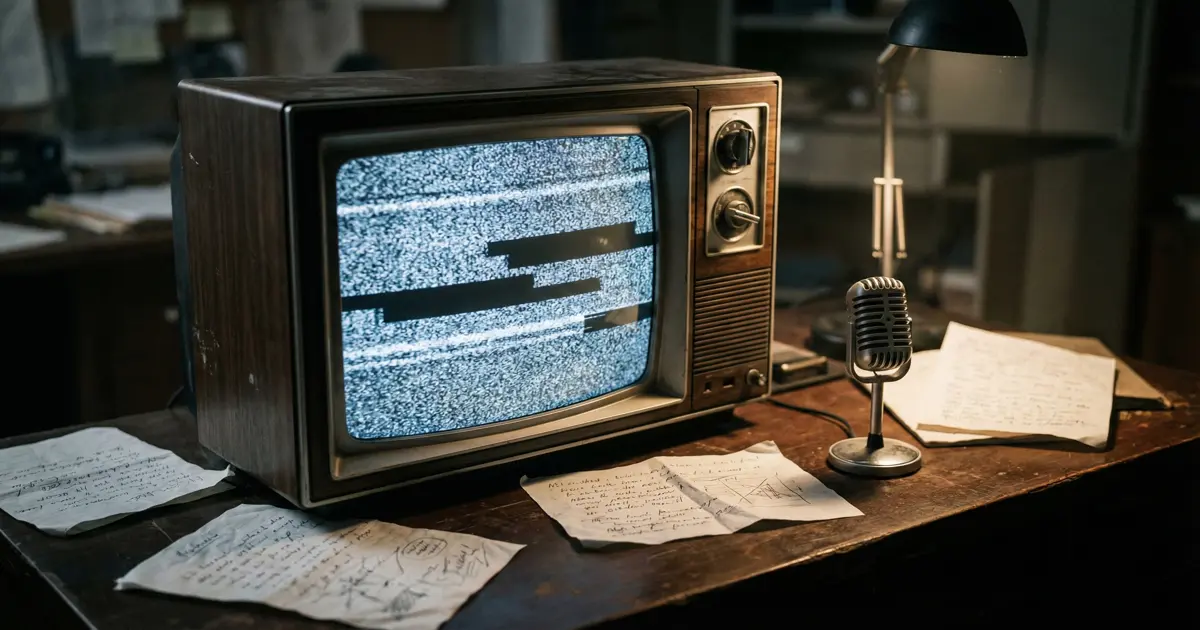
I get proper pissed off by this, and I can’t be the only one noticing it.
You watch these long-form interview channels on YouTube, the ones where someone sits down for an hour or two with people who’ve got genuinely important stories to tell.
Prison officers, social workers, police officers, people who’ve lived through awful experiences.
And the host kicks off with the usual preamble: “I create this content because these stories need to be heard. I’m just giving people a platform. I don’t do this for clicks or money. I’m doing a public service here.”
Sounds noble, doesn’t it? For many it’s mostly BS.
Then they start talking. And every time they get to the difficult bit, the bit that actually matters, they either bleep it out or dance around it like they’re playing some bizarre game of verbal Twister.
I was watching one recently, a former prison officer talking about the realities of managing different categories of prisoners. Male, female, the crimes that get you put on certain wings, the challenges of keeping vulnerable prisoners safe. They were clearly trying to discuss sexual assaults, rape, paedophilia, but without actually saying the words. The host kept interrupting: “I’m not going to keep using that word because of the YouTube algorithm.”
And I’m sat there thinking, hang on. You just spent five minutes telling me how authentic and uncensored your content is, how you’re doing this noble work of getting these important stories out there. But you won’t say “rape” or “paedophile” because YouTube might not like it?
The Algorithm Made Me Do It
Look, I partly understand the frustration. Why should your video get buried in the algorithm just because you’re talking about difficult subjects using honest language? Why should genuine, important content get less exposure than some bloke opening Pokemon cards or whatever nonsense gets millions of views?
But here’s where it breaks down for me. Two things really:
First, why is YouTube’s algorithm penalising content that discusses serious issues using plain language? What are they protecting us from, exactly? Truth? Reality? These aren’t gratuitous swear words thrown in for shock value. If someone’s talking about rape crimes or paedophilia, those words aren’t there for entertainment. They’re there because that’s what happened. That’s the reality of what they’re discussing.
Damn I do like writing in my own blog on my own domain! Nobody censors me!
Second, and this is the bit that really gets me, why do these YouTubers, who are making a bloody good living from the platform, let themselves be pushed around like this? Because as long as they keep bleeping out “rapist,” censoring “paedophile,” and dancing around “transgender” or whatever other words YouTube’s decided are problematic this week, YouTube wins. Google wins.
You Can’t Have It Both Ways
Here’s my issue. You can’t claim you’re doing important work while simultaneously refusing to actually do it properly. You can’t say “I’m giving victims a voice” and then bleep out half of what they’re trying to say. You can’t position yourself as some kind of truth-teller while playing by rules that actively obscure the truth.
Either you’re creating genuinely important content that needs to be heard, uncensored and honest, or you’re creating content that plays nice with the algorithm so you can keep making money.
Both are fine, but pick one. Don’t dress up the second one as the first.
And maybe I’m being harsh here. Maybe these content creators are stuck between a rock and a hard place. Maybe they genuinely believe that getting the story out there, even in a censored form, is better than not getting it out at all. Perhaps they’ve done the maths: a watered-down version seen by 100,000 people is more valuable than an uncensored version seen by 10,000.
But I’m not convinced. Because when you start self-censoring to please an algorithm, where does it stop? Today it’s bleeping “rape.” Tomorrow it’s avoiding the topic altogether because it’s too risky. Next week it’s only covering subjects that are guaranteed to be algorithm-friendly.
What Are We Actually Protecting?
The fundamental question nobody seems to be asking is this: what exactly are we being protected from?
If someone needs to have a difficult conversation about rape crimes, about paedophilia, about any serious subject that makes us uncomfortable, that conversation needs to be had. And it needs to be heard properly, without asterisks, without bleeps, without dancing around the words like they’re radioactive.
We’re adults. We can handle hearing difficult words when they’re used in context, in service of understanding something important. Treating us like children who need to be shielded from reality doesn’t help anyone. Least of all the people whose stories are being told.
The irony is that by censoring these words, platforms like YouTube are actually making these topics more taboo, harder to discuss, easier to ignore. They’re not protecting anyone. They’re just making it easier for people to keep scrolling past uncomfortable truths.
Still Here, Still Frustrated
I know I’ve probably written about this before and lost the note. Some thoughts just keep coming back round because they never really get resolved. This is one of them.
And honestly? I’m still frustrated. Because I watch these videos, and I see people with genuinely important stories to tell, censoring themselves before they even get started. I see hosts who claim to be fearless truth-tellers, scared of saying words that accurately describe what they’re discussing.
But I’m still here, writing about it. You’re still here, reading it. And maybe that’s something. Maybe there’s still space for conversations that don’t bleep themselves into meaninglessness. We’ve made it this far without letting algorithms dictate every word we use.
Let’s keep that going, shall we?
a few Q&As for the skimmers
Why do YouTubers censor words in their videos?
Many content creators self-censor to avoid being penalised by YouTube’s algorithm, which can reduce visibility and reach for videos containing certain words or topics, even when used in legitimate context.
Does YouTube automatically flag certain words?
YouTube’s algorithm can demonetise or limit distribution of videos containing words related to violence, crime, or sensitive topics, regardless of context. This encourages creators to bleep or avoid these words entirely.
Is self-censorship helping or hurting important conversations?
Self-censorship makes difficult topics harder to discuss honestly. While creators argue it helps them reach more people, it can water down the message and make serious subjects more taboo rather than less.
Can YouTubers talk about serious crimes without censorship?
Technically yes, but many choose not to risk algorithmic penalties. However, some creators prioritise authenticity over reach, accepting that honest discussions about difficult subjects might limit their audience size.
What words does YouTube’s algorithm typically flag?
Common flagged words include those related to violence, sexual crimes, and controversial topics. The exact list changes regularly, and YouTube doesn’t publish comprehensive guidelines, leaving creators guessing what’s safe.
This is part of an ongoing series where I dig out old thoughts and half-finished notes from years past. Sometimes they’re time capsules of how I felt then. Sometimes they’re still bloody relevant now. Either way, they’re real, unfiltered, and probably a bit ranty. If you’re interested in more nostalgia pieces where I work through thoughts I should have dealt with years ago, there are plenty more where this came from.