
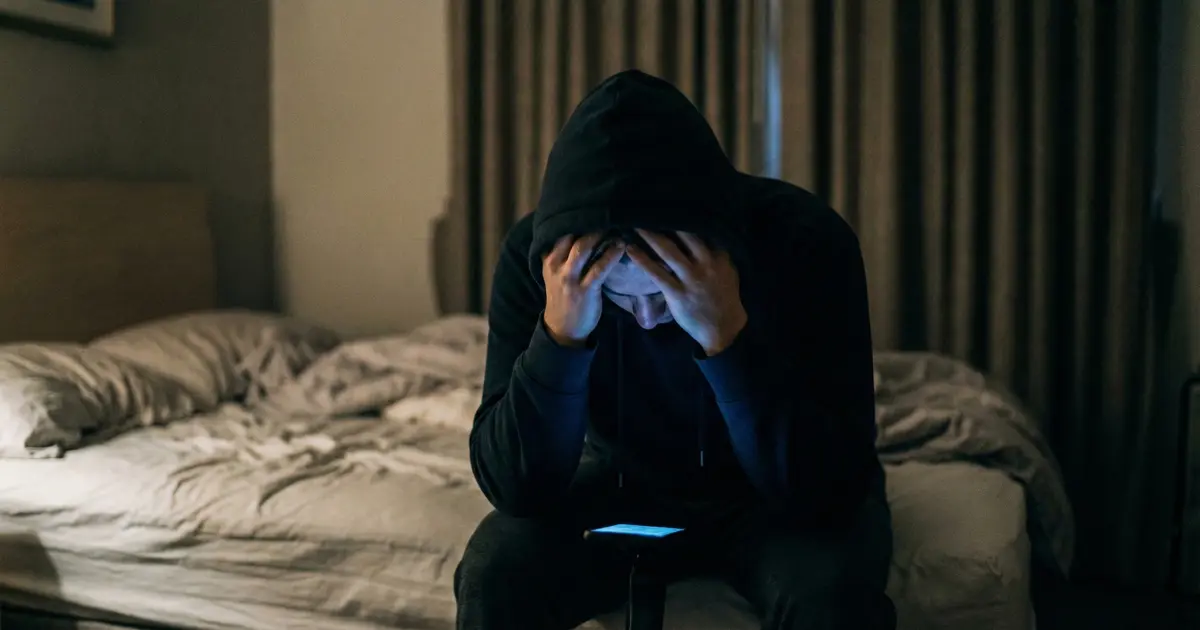
I’ve just written about my own brain and how it works. Or doesn’t work, depending on the day. ADHD, depression, anxiety, the whole bloody catalogue. And I kept it raw because that’s how it needs to be.
But here’s what’s been winding me up lately.
Mental Health Isn’t Your Next Binge-Watch
Turn on YouTube. Open a podcast app. Scroll through Instagram. You’ll find dozens, maybe hundreds, of people talking about mental health challenges. And fair enough, we need those conversations. But watch how they’re presented.
Perfect lighting. Perfect sound. Two people sat across a table or in matching armchairs, discussing trauma, depression, ADHD, anxiety like they’re chatting about what’s for dinner or what’s on TV tonight.
Everything’s been sandpapered smooth.
All the rough edges polished off.
The real mess of living with these conditions?
Nowhere to be seen.
Turned into polished entertainment.
When Struggle Becomes Content
I’m not saying everyone doing this is taking the piss. Some of these people are genuine. They’ve lived it, they understand it, they still live with it every single day. You can tell the difference.
But then there are the others.
The ones who’ve spotted a trend. Who’ve realised that mental health content gets views, gets engagement, gets subscribers. So they’ve turned real struggle into entertainment.
Packaged it up nicely behind a powerful thumbnail, title and description (with links, of course). Made it palatable for the algorithm.
- Perfect hair.
- Perfect setup.
- Perfectly staged.
And I sit there thinking, you’re making money out of struggles that real people have. Struggles that don’t switch off when the camera stops rolling.
And that pisses me off. A LOT!
What Real Struggle Actually Looks Like
Let me tell you what decades of living with this actually feels like.
It’s not a 20-minute video with chapters and timestamps. It’s waking up and not knowing if today’s a day where your brain will cooperate or if you’ll spend six hours trying to focus on something that should take twenty minutes.
It’s the frustration of still, after 20, 30, 40 years, not being able to hold your attention on something for more than a few minutes. Not because you’re lazy. Not because you’re not trying hard enough. Because your brain simply doesn’t work that way.
It’s the impact of childhood trauma. Teenage trauma. Adult trauma. Stacked up over decades, affecting every single aspect of how you function. How you work. How you relate to people. How you see yourself.
And it doesn’t get easier.
You don’t just flip a switch and suddenly everything’s fine. You learn to manage it, maybe. You develop strategies. You find what works. But it’s still there, every single day.
That’s the reality. Not the glossed-over, perfectly presented version you see online.
The Diagnosis Struggle Nobody Talks About
Here’s another thing that gets smoothed over in all this polished content.
Getting a diagnosis or even an assessment isn’t straightforward. You might not fit the criteria neatly. Your symptoms might overlap with three different conditions. Or you might have spent so long developing coping mechanisms that you’ve masked the very things they’re looking for.
The system isn’t designed for messy, complex, real-life presentations of mental health conditions. It wants clear-cut cases that tick specific boxes.
So people struggle for years, sometimes decades, knowing something’s not right but unable to get the help they need because they don’t quite fit the template.
That doesn’t make for good content, does it? Doesn’t fit into a neat narrative arc with a satisfying resolution.
Why This Matters
When mental health gets turned into entertainment, when all the difficult bits get sanded off to make it easier to watch, easier to digest, easier to monetise, we lose something important.
We lose the truth of it.
And the people who need to hear that truth, who need to know they’re not alone in the messy, complicated, ongoing struggle of living with these conditions, they get a sanitised version instead.
They see the perfect setup and think their own experience, their own mess, their own inability to “fix” themselves, means they’re doing it wrong.
They’re not. This is just what it’s like.
If You’re Struggling, Please Get Help
Look, despite everything I’ve just said about performative mental health content, please don’t let that put you off seeking help.
If you’re 12, 20, 40, whatever age, and you’re struggling, go and get the help you need. Push for that assessment. Keep pushing if you don’t fit the criteria the first time. It can be life-changing.
The treatment, the diagnosis, the understanding of what’s actually going on in your head, it matters. It really does.
Just don’t expect it to look like those polished videos. Don’t expect a neat resolution or a tidy ending where everything suddenly makes sense.
Expect messy. Expect ongoing. Expect a process, not a solution.
But get the help anyway. Because living with this stuff without support, without understanding, without the right strategies? That’s harder than it needs to be.
The Bottom Line
We need real conversations about mental health. Not perfect ones.
We need the rough edges left in. The uncomfortable truths. The admission that sometimes you’re 50 years into your life and still can’t focus on a task for more than a few minutes.
We need honesty, not entertainment.
Because the people facing these challenges every single day? They deserve better than a perfectly lit video that makes their reality seem like something you can fix with the right lighting and a good microphone.
They deserve the truth.
Even when it’s raw.
Especially when it’s raw.
Uncomfortable FAQs about Mental Health
Why is polished mental health content problematic?
When mental health struggles are presented with perfect lighting and editing, all the messy reality gets smoothed out. This creates unrealistic expectations and makes people feel like they’re failing because their own experience doesn’t match the sanitised version they see online.
Should I still seek help for mental health issues?
Absolutely yes. Despite the performative content online, getting proper assessment and treatment can be life-changing. Push for that diagnosis even if you don’t fit the criteria perfectly. Real professional help is completely different from polished social media content.
Why is getting a mental health diagnosis so difficult?
Many people don’t fit diagnostic criteria neatly. Symptoms overlap between conditions, and years of coping mechanisms can mask the very things professionals look for. The system wants clear-cut cases, but real mental health presentations are often messy and complex.
Does mental health treatment make everything better?
No, and that’s the honest truth. Treatment helps you manage conditions and develop strategies, but it’s not a magic switch. You might still struggle with focus, anxiety or depression after decades. The difference is understanding what’s happening and having tools to cope.
What’s wrong with mental health content creators?
Not all mental health content is bad. Some creators genuinely understand and live with these conditions. The problem is those who’ve turned real struggle into entertainment, packaging trauma and ongoing challenges into perfectly edited videos that sanitise the reality for views and profit.