
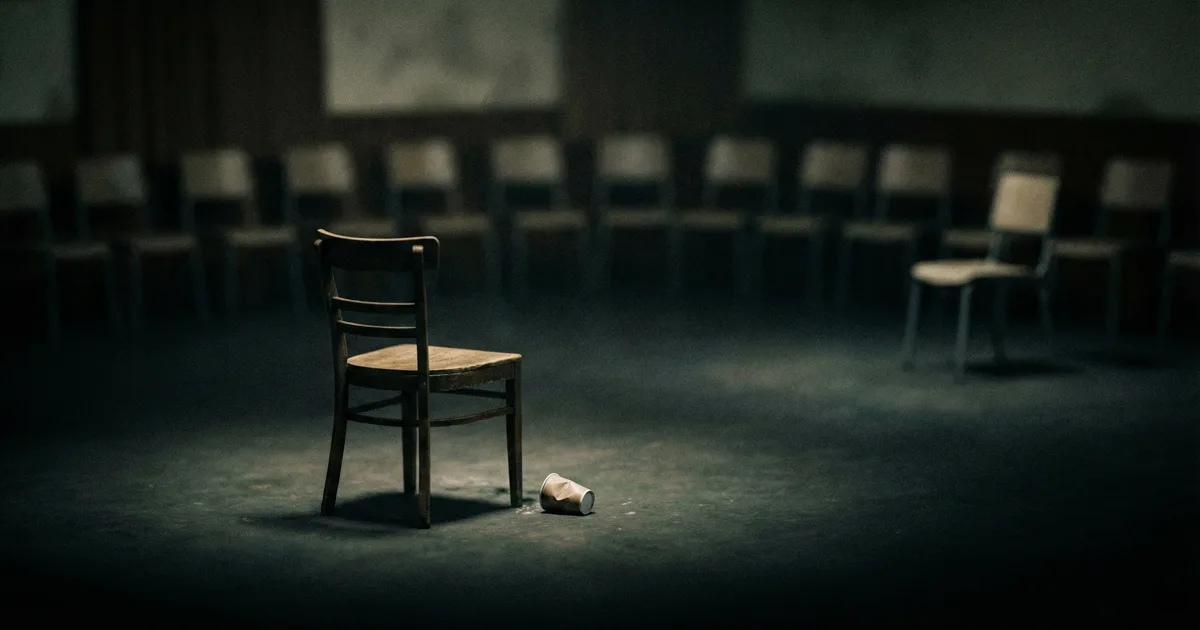
Put 15 blokes in a circle. Tell them they can offload. Tell them they won’t be judged. Tell them nothing leaves the room unless someone is at risk of harming themselves or others.
Now watch what happens.
You’re going to hear things that sit perfectly with you. Things you relate to, can understand, can relate to. You’re also going to hear things that make you uncomfortable.
That’s the risk.
We’re not children.
We’re grown men.
If you get the same opportunity to speak, to offload, to say your piece, then part of being in that circle is accepting that someone else might say something you don’t like.
Not abusive. Not threatening. Just uncomfortable.
Uncomfortable isn’t the same as unsafe.
But then there’s the other layer. Sometimes what’s said doesn’t just irritate you. It triggers you. It stirs up memories you’d rather keep buried. It drags old shame back to the surface. It can leave you flat for hours. Sometimes days.
That’s also the risk. You can’t create a space for raw honesty without occasionally bleeding a little.
The Other Side of the Risk
Several months ago I found myself on the receiving end of something different. Not in the circle. Not on a Monday night. On a Tuesday morning.
Private messages. One after another. For five or six hours. A bloke offloading his grievances, his frustrations, his offence at what he alleged had been said in the group, his anger at the format of open offloading to some extent, his issues with the unlimited openness of it all.
I did what I thought was right.
I defended the system. I defended the format. I defended the members he was criticising.
Because the structure exists for a reason. It’s not random. It’s not chaotic. It’s built the way it is to protect everyone in that room.
He was passing judgement!
Eventually, I passed it all on to the area lead. Forwarded everything. Gave the member the correct email address. Followed the process. And that was that. Or so I thought.
Because that’s the last I heard of it. No follow-up. No “You alright after that?” No acknowledgement that being bombarded for hours might actually take something out of you. Whether anything happened after that, I genuinely don’t know. Maybe it did. But from where I was standing, the silence said enough.
The brand matters. The member matters. But do I?
When You’re the One Holding the Line
When you help hold the space, you absorb some of it – the weight of what’s said, the fallout when someone doesn’t like it. That’s part of the role. You don’t just sit in the circle. You help protect it.
But facilitators are not emotional punchbags.
We’re not therapists.
We’re not paid support workers.
We’re men giving up our time to keep the circle running. If members take risks by speaking, facilitators take risks by absorbing.
Because a safe space isn’t built on policy documents. It’s built on people. And people (including facilitators who’ve been on the end of a barrage of criticism and expressed how upsetting it was) sometimes need a simple thing: “That was heavy. You alright?” Not as process. Not as protocol. As human beings.
A safe space for honesty will always carry emotional risk, for members, for facilitators, for everyone in the circle. The real question isn’t whether risk exists. It’s whether we acknowledge it when it lands. And whether the men holding the space are allowed to matter too.
What Nobody Tells You About Men’s Mental Health Circles
What is a men’s mental health circle and how does it work?
A men’s circle is a structured peer support group where men meet regularly to talk openly, without judgement. There are ground rules: what’s said in the room stays there, no one is forced to speak, and confidentiality is only broken if someone is at risk of harm to themselves or others. The format is simple by design. Simple tends to work.
Is it normal to feel uncomfortable hearing what others share in a men’s group?
Yes, and that’s not a flaw in the format – it’s the point. When men speak honestly, some of what comes out will land awkwardly. It might challenge your views, stir up old feelings, or just make you squirm a bit. Discomfort and unsafety aren’t the same thing. Learning to sit with the difference is part of what the circle offers.
What happens if something said in the group upsets or triggers me?
It can happen. Honest spaces carry emotional risk, and sometimes what’s shared touches something you weren’t expecting. Most groups have a facilitator you can speak to after a session, and it’s worth using that. If something is sitting heavily days later, that’s worth talking about too – with someone you trust, or a professional if needed.
Who looks after the facilitators in men’s mental health groups?
Honestly? That’s the gap. Facilitators absorb a lot – not just what’s said in the room, but the fallout that sometimes lands in their inbox or their messages at all hours. They’re not therapists, they’re not paid, and they’re not bulletproof. If you’re part of a group, the odd “you alright?” to the person holding the space costs nothing and means more than you’d think.
Can I contact a facilitator privately if I have an issue with the group?
Most groups have a process for raising concerns, and it’s worth using it rather than going direct to a facilitator’s personal messages. Facilitators are volunteers, not a complaints department. If something is genuinely bothering you about the format or what was said, there’s usually an area lead or organisation contact who’s better placed to help.