
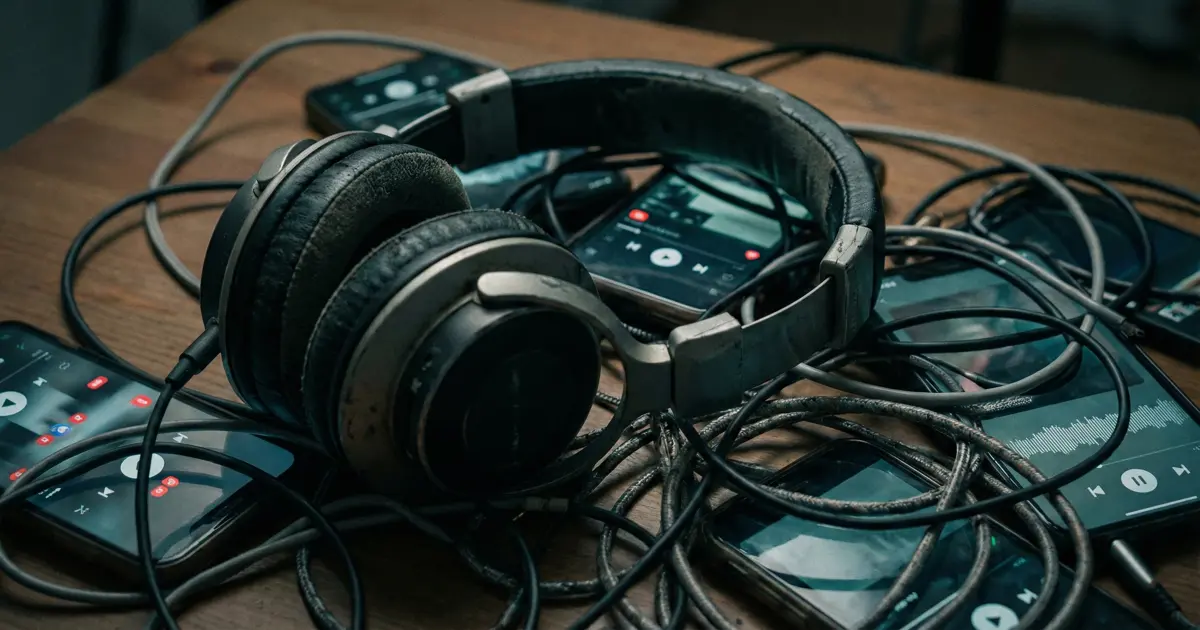
If you feel like YouTube has quietly filled your recommendations with soulless “audiobooks” read by lifeless robot voices, you’re not imagining it. You’re watching a new content racket evolve in real time, and it runs on low effort, AI tools, and platforms that pretend to care about “authenticity” while cashing the ad cheques.
This is a wake-up call, not a eulogy. Audiobooks aren’t dead. But if people keep tolerating this circle of slop, the good stuff is going to be buried under hours of machine-generated filler that no one genuinely loves, but everyone sort of half-listens to.
The Audiobook “Circle of Slop”: How YouTube Turned Stories into Noise
On the surface, these channels look harmless: thumbnails promising deep self-help truths, spiritual journeys, classic literature, or “life-changing” psychology, often two hours long or more.
Scratch that surface and you find the same pattern repeating.
You get AI-generated or scraped text, fed into text-to-speech or voice cloning tools (ElevenLabs and the “Elite Voice” style platforms are openly marketed for this), then rendered as endless “audiobooks” with all the emotional depth of a shipping forecast.
Then you notice the comments. Audiobook channels commenting on other audiobook channels, all with similar branding, all giving each other praise, engagement, and algorithmic juice. It’s not organic conversation – it’s mutual back-scratching disguised as community, sometimes aided by AI-assisted comment tools that can automatically generate friendly replies and fake engagement.
The result is a closed loop:
- AI writes or repackages the content
- AI reads the content in a smooth, emotionally flat voice
- AI or canned scripts help manage comments and “build community”
- Human input exists, but it’s mainly about pushing buttons, uploading files, and watching the analytics
Why This Racket Exists: Follow the Incentives
This didn’t happen because people suddenly stopped caring about stories. It happened because YouTube set up a system where mass-produced monotony is rewarded, then sprinkled a bit of AI on top to supercharge the worst instincts.
Three drivers stand out.
First, AI has made scriptwriting and narration cheap and fast. Voice AI platforms brag about thousands of synthetic voices, unlimited characters, and output in multiple languages, directly pitching themselves at YouTube creators who want to scale content without hiring actors or narrators.
Second, watch-time is currency. A two-hour “audiobook” is algorithmically attractive. It keeps people on the site, even if they’re only half-listening while they sleep, clean, or scroll their phone. Whether the content is good becomes secondary – what matters is that something is playing.
Third, the monetisation rules effectively say “AI is fine as long as it doesn’t look like total spam.” YouTube’s own help pages now talk about “inauthentic content” and “mass-produced” videos being demonetised, but they also explicitly confirm that AI voiceovers and AI-assisted videos are allowed when there’s some original value or human input.
So the game becomes simple. Add a bit of editing. Throw in subtitles. Maybe flash a stock background. Call it “original” and pass the sniff test. Tutorials across the creator world spell out exactly how to do this while still getting paid.
The Legal and Ethical Mess Few Will Talk About
Strip away the tech gloss, and a lot of this so-called audiobook economy is walking right along the edge of copyright law, and sometimes crossing it.
Copyright basics aren’t complicated. If a book is under copyright and you don’t have permission from the rights holder, you can’t lawfully upload a full audiobook version to YouTube and share it publicly. Some people get away with it because enforcement is patchy, Content ID doesn’t catch everything, and smaller publishers can’t sit on YouTube all day hunting infringers.
AI complicates this in two ways.
First, training and source material. Many AI audiobook workflows rely on texts scraped from the web or e-books, then fed into models or used as templates, which can easily cross into derivative work territory if the material is copyrighted and used without permission. The US Copyright Office has weighed in on this: AI-generated output itself can’t be copyrighted in the same way human authorship can, and training on copyrighted material without licences remains legally murky and heading straight into litigation.
Second, voice and likeness. Voice cloning tools can mimic real narrators or celebrities without consent, and YouTube’s newer “inauthentic content” rules now treat AI voices pretending to be real people as a serious policy issue, particularly if there’s no disclosure. In other words, if someone clones a narrator’s voice to “read” a book they never recorded, that’s not just lazy – it’s a legal and ethical minefield.
The basic principle here is straightforward: property rights matter. Intellectual property is still property. A system that normalises scraping books, cloning voices, and pushing AI narrations of copyrighted works while pretending it’s all just “innovation” isn’t a functioning market – it’s unauthorised use dressed up with a sleek interface.
The Middle Ground: When AI Narration Is Legitimate
Despite all that, AI narration itself isn’t inherently problematic. Context matters. Consent matters. Transparency matters.
Platforms like Audible, Spotify, and others have started to allow AI-narrated titles under controlled conditions: the author or publisher opts in, rights are clear, and listeners are told when a voice is synthetic. Some independent authors, especially those without the budget for professional narrators, use AI voices as a compromise to make their work accessible in audio form.
There’s also a genuine accessibility angle. For visually impaired readers or people with attention issues, AI narration can mean more books become available that would otherwise never get an audio edition at all. Provided the rights are sorted and the labelling is honest, that’s a net positive.
Even YouTube, to its credit, isn’t banning AI outright. The updated policies explicitly state that AI-assisted content can be monetised if it’s significantly transformed, original, and honest about what it is. The problem isn’t the tool – it’s what people choose to do with it. When AI is used to enable creators, that’s one thing. When it’s used to flood the platform with cookie-cutter content, that’s something else entirely.
The Human Cost: Listeners, Creators, and Trust
The circle of slop does damage in quiet ways. It doesn’t scream scandal – it just slowly lowers standards until everyone forgets what normal looked like.
Listeners get trained to accept mediocrity. When you’re constantly fed two-hour AI “audiobooks” where joy, grief, tension, and humour are all read in the same polite, frictionless tone, you start to think that’s just how audiobooks sound. It becomes bedtime noise, not storytelling. Attention spans flatten. Expectations sink.
Real narrators and authors get squeezed. Human-narrated audiobooks cost time and money to produce. AI channels can undercut them by dumping hundreds of hours of content with almost no labour cost. That creates a race to the bottom where being good matters less than being constant. If you’re a mid-list author or an independent narrator, you now compete not just with big publishers but with automated factories of “good enough” audio.
Trust in platforms erodes further. YouTube has already had to rebrand its policy around “repetitious content” into “inauthentic content” to cover everything from cloned voices to templated spam. The platform is drowning in AI content and trying to claw back some credibility by tweaking monetisation and slapping more labels on things. When audiences realise that half the “audiobooks” in their feed might be unlicensed, AI-generated and barely checked, they don’t become more trusting. They become numb and cynical.
A Balanced, Blunt Reality Check
This is the uncomfortable middle ground.
AI isn’t going away. Nor should it. Used properly, AI narration can widen access, help small creators, and give niche books an audio life they would never otherwise have. Dismissing all AI audiobooks as rubbish would be lazy and wrong.
But pretending that the current YouTube audiobook ecosystem is healthy would be even more dishonest. Channels pumping out AI-generated “books”, commenting on each other’s uploads in closed engagement circles, and hiding behind vague labels of “original content” aren’t democratising creativity. They’re farming attention at scale.
So if you care about stories, a few blunt points follow.
If you’re a listener, stop giving watch-time to channels that clearly treat you as background noise. Look for human narrators. Look for proper licensing. If a book is still under copyright, a random channel with 300 anonymous uploads isn’t doing you or the author a favour.
If you’re a creator who believes in doing things properly, don’t hide behind “everyone’s doing it” to justify building your own AI audiobook operation from scraped texts. Respect the work. Pay for licences or use public domain material. Be honest about when you use AI, and why.
If you’re a platform, stop talking about “authenticity” in press releases while quietly monetising mass-produced AI content until someone complains loudly enough. Enforcement shouldn’t depend on viral outrage threads and random DMCA complaints. Your own policies already define inauthentic, spammy content – apply them before the entire feed becomes unusable.
The tools aren’t the villain here. The circle of slop is what happens when platforms chase ad revenue, creators chase easy money, and audiences get too tired to push back. AI just made it faster.
The only question left then, is whether people who actually give a damn about books, rights, and basic quality are prepared to stop shrugging and start being choosy again.